

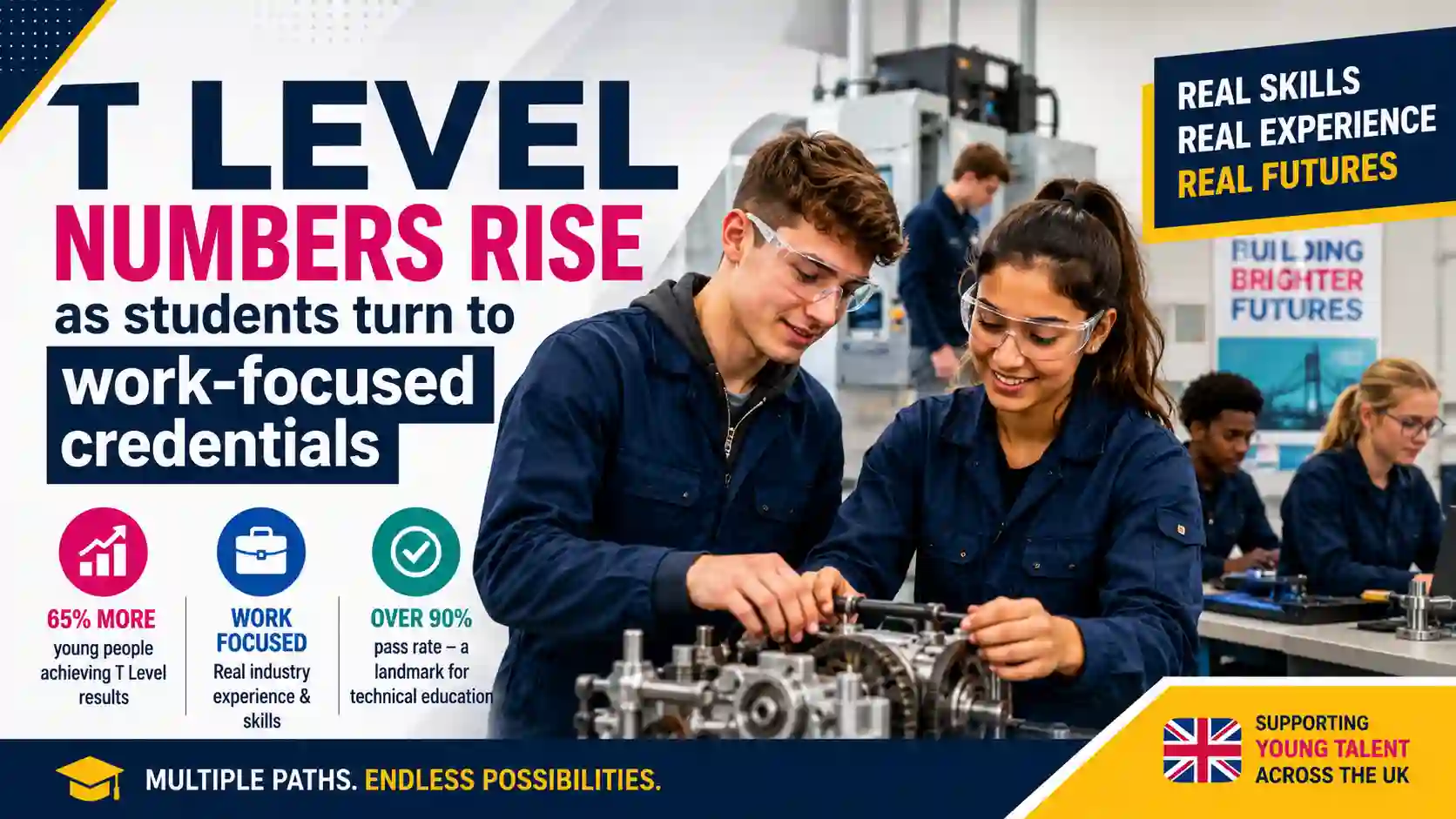
The Department for Education said there were 65% more young people obtaining T Level results yesterday (13 August).
T Levels were established in 2020 as a ‘technical’ or vocational alternative to A-levels. Students take one T Level across two years. It is worth three A Levels.
There is a core requirement of a minimum 315 hour or 45 day industrial placements as part of the certificate, all students must complete this if they want to pass the overall qualification.
Nearly 20,000 students completed a T Level this year, up from around 12,000 in 2025. The administration stated the pass rate was well than 90%, calling it a “landmark moment” for technical education.
Education secretary Lucy Powell said it was “very encouraging” to see more pupils taking work-focused credentials.
“There is no single path to where you want to go. That is why we are opening doors for young people to reach their potential with additional high quality possibilities, be that thru academic study, technical education or hands-on training for skilled labour. She said: “Today is the beginning of an exciting future, whichever path you choose.”
Figures released yesterday for thousands of students taking A Level and AS Level exams showed steady improvement.
Maths A Level results were up 3.7% on previous year and the biggest ever cohort of students achieved results, while the number of students taking up STEM courses (science, technology, engineering and maths) also increased by 3.7%.
The DfE said the number of students accepted on to a higher education course this year rose by 2% compared with 2025.
“Academic routes are only one part of the system,” said Patrick Milnes, head of policy at the British Chambers of Commerce. We appreciate the government’s efforts to boost technical and vocational education to give firms the skills they need.
“Careers advice, key employability skills and real world learning need to be embedded in the curriculum from the outset. This will help more young people make educated choices and boost future business growth.”
Janine Chamberlin, country manager for business networking site LinkedIn in the UK, said young people still faced a hard jobs market.
“Grades still matter, but they are definitely not the whole story anymore. Work is changing fast, for all of us, and organisations that want to secure the appropriate personnel for the future need to look beyond merely exam certificates,” she said.
“Employers are looking for skills like adaptability and communication and even AI literacy more and more. “Grades still unlock doors, but it’s these human qualities that will help young people go thru them.
Last October the government launched another post-16 certification, the V Level, intended to supersede Btecs and other technical courses.