

The number of international students wanting to come to the UK has crashed, with new Home Office numbers suggesting a 20 per cent dip in student visa applications over the last year. The results add to the anxieties facing would-be migrant students wishing to study in Britain, with tightened immigration laws, rising visa refusals and uncertainty over the ability to work after studying continuing to undermine the UK’s attractiveness as a study destination.
There were 349,900 main applications for UK student visas in the year to October 2026, Home Office records published on 12 November 2026 show. This compared with 434,000 applications in the same period in 2025 – a decrease of 84,100 applications.
The reduction was even more obvious in October when just 5,800 major applicants applied under the funded study option. It was down 31% compared to October 2025 when there were 8,400 applications and down 44% compared to October 2023. For international students considering the UK, the numbers underline an increasingly tough immigration climate, especially for applicants from countries where visa refusals and added scrutiny have become key issues.
International Student Applications Keep on Falling
The reduction has been most evident during the main summer recruitment season, when colleges typically see the highest volume of applications from international students. The UK received 236,100 applications for student visas between July and October 2026, 16% fewer than the 282,200 applications received over the same time in 2025. That was also a 27% decrease from the 323,100 applications filed in July to October 2023.
Monthly numbers illustrate the extent of the decline:
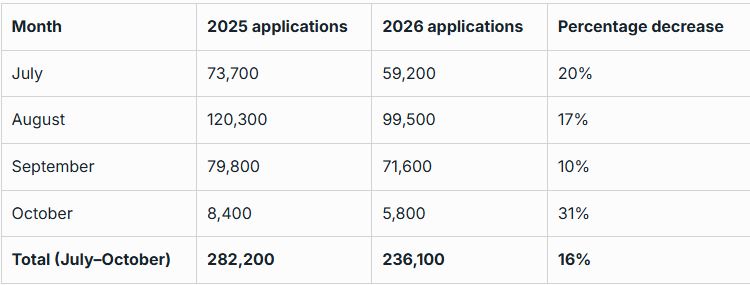
The steepest fall year-on-year was in October, suggesting that fewer overseas students either opting to study in the UK or facing more barriers to advance with their visa application.
Increasing Worries for Students from Pakistan, Nigeria, India and Ghana
A key issue for the foreign education sector has been the reported increase in student visa refusals. In particular, those from students originating from countries assessed by UK immigration officials as being greater risk. These include Pakistan, Nigeria, India and Ghana, which have historically been significant markets for UK colleges.
The government’s visa brake introduced in late March 2026, which applies to nationals of Afghanistan, Cameroon, Myanmar and Sudan, has also generated questions about whether similar limitations or increased scrutiny could affect applications from other countries. Universities are feeling the heat more under the Basic Compliance Assessment standards, adopted in June. Under these conditions, institutions risk losing their sponsorship licence if more than 5 per cent of their student visa applicants are declined.
Consequently, several colleges have reportedly restricted or banned recruitment from particular nations to safeguard their compliance records. The Financial Times reports at least 15 UK colleges have blocked recruitment from Pakistan and at least nine have suspended recruitment from other nations deemed higher risk. Such changes could lead to fewer university choices, more rivalry for places and more uncertainty for potential student migrants when considering a transfer to the UK.
Jonathan Hill, senior immigration manager at law firm Fragomen, said colleges pulling out of particular international markets would have contributed to the fall in applications. He also alluded to the increased expenses of travel and living, global economic uncertainties and changes to the UK’s Graduate Route as other deterrents for international applications.
Changes to Post-Study Work Rights That Impact the Appeal of the UK
The UK’s post-study career prospects have historically been a key consideration for overseas students when considering where to study. But the government’s announcement in May 2025 to lower the Graduate Route from two years to 18 months for qualified students graduating from January 2027 added more uncertainty for those selecting a university in the UK.
For many prospective migrant students, the chance of getting meaningful UK job experience after graduating is a significant factor in their decision to invest in an abroad education. The anticipated cut has generated questions over whether the UK would stay competitive with other prominent study locations offering attractive post-study career opportunities. But there is one recent event which may be reassuring.
The government announced proposals in the Autumn Budget to reintroduce the two-year Graduate Route for overseas students graduating from universities meeting suggested high-compliance standards and strong labour market outcomes. The move is seen as an attempt to boost the UK’s international education sector and restore confidence among students from overseas. However, the exact eligibility criteria have not yet been determined, with the Home Office and Department for Education anticipated to be working jointly on the policy. This means that prospective students will have to wait for more details on which universities and alumni will be eligible.
Restrictions on Bringing Family Members Compound the Difficulties
There are also severe constraints for international students who wish to relocate to the UK with their family. Home Office records reveal applications from dependants of students have fallen 32% to barely 15,400 in the year to October 2026. It follows a change to immigration rules in January 2024 which stopped most overseas students from bringing dependants to the UK.
The main exceptions are students on postgraduate research programs and some government-sponsored courses. The Home Office said dependant applications were down 89% compared with the year to December 2023, before the limitations were put in place. Such restrictions have made the UK a challenging destination for international students with partners and children, especially those who had originally planned to move as a family.
Universities Want Adjustments to Win Back Confidence of International Students
Universities are worried about the longer term impact of immigration policy on the UK’s overseas education business as applications continue to fall. While premier UK universities continue to attract the best students from around the world, the international student market is volatile and shows no sign of slowing down, said Zaid Kadhum, policy manager at the Russell Group.
“It’s the cumulative effect of changes in government policy over several years, not a sudden change in international demand,” he said. Kadhum applauded the government’s plans to revive the two-year Graduate Route for graduates from qualifying universities, saying the news is a promising first step. He also warned officials to think again about the proposed foreign student charge, which he said might put further financial strain on one of the UK’s most vital export industries.
So What Does This Mean for International Students Looking to Study in the UK?
The recent results do not suggest the UK has shut the door on international students. British institutions remain popular with global applicants and the UK remains a key destination for higher education. But the drop shows the necessity of knowing the rules for immigration that are currently in place before applying. Prospective international students should note particularly:
University sponsorship: Make sure the university you want has a valid Student sponsor licence and is accepting applications from students in your nation.
Visa requirements Check the latest Home Office requirements for financial, English language and documentary evidence before you apply.
Risks of Visa Refusal Make sure that all the supporting documents are accurate, full and are in line with the information given in the application.
Dependants Find out about limits on bringing a spouse or children, particularly if you are doing taught postgraduate courses.
Post-study work opportunities: Please check the latest Graduate Route guidelines and if your chosen university is likely to meet the new eligibility criteria.
Cost of living: When you are considering to migrate to the UK, you should factor in the cost of tuition fees, lodging, transit and upkeep.