

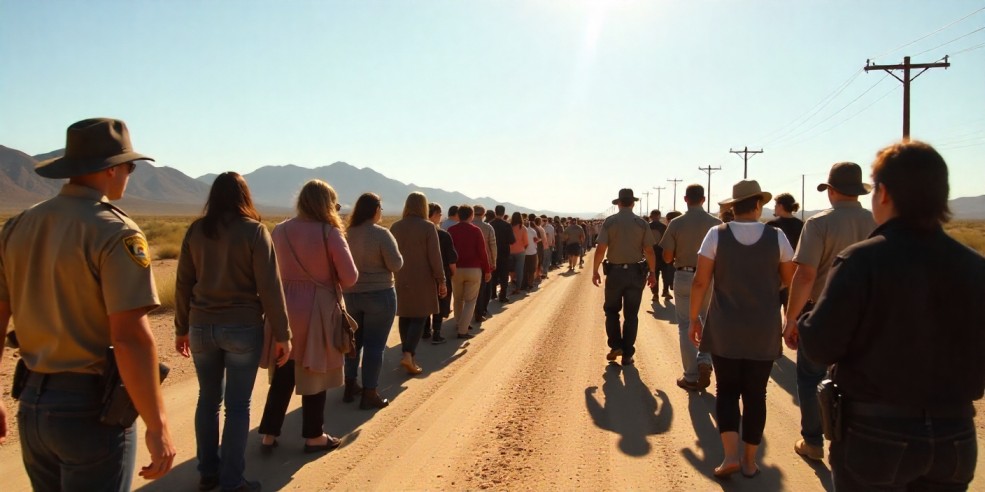
UK Five Eyes Immigration Crackdown: Impact on South Asia. India, Pakistan, and other countries are under pressure to accept deportations or risk reduced visas as a result of the UK’s Five Eyes immigration crackdown.
Summary: Supported by Five Eyes, the UK has begun an immigration campaign, putting pressure on Bangladesh, Nepal, India, and Pakistan to return denied asylum claimants or face severe visa restrictions. As nations balance cooperation against public backlash, the shift creates diplomatic tensions, risks for workers and students, and human rights issues.
Why This Policy Is Important Right Now
The UK announced one of its toughest immigration enforcement policies in decades in September 2025. Working with the influential Five Eyes intelligence coalition, Britain’s new Home Secretary Shabana Mahmood declared that nations that turn away their denied asylum requests would be subject to harsh visa restrictions. There are significant diplomatic, social, and economic ramifications for South Asian countries including Pakistan, India, Bangladesh, and Nepal from this momentous action, which was orchestrated by the UK, the US, Canada, Australia, and New Zealand. Official figures from the UK Home Office show that more over 3,000 undocumented immigrants have already crossed the English Channel in 2025 alone with over 1,000 arriving on Mahmood’s first day in office—a clear indication of the pressing need for this change in policy.
The action represents more than just border security. It symbolises the Five Eyes’ collective security posture, which is a network that was initially formed for the purpose of exchanging intelligence and is currently developing into a single front for immigration enforcement. What does this mean, however, for South Asian workers, students, and families—many of whom mainly depend on UK visas for work, education, and reunification?
The New Function of the Five Eyes Alliance in Immigration
The Five Eyes: What is it?
One of the strongest intelligence-sharing networks in the world has long been the Five Eyes alliance, which consists of the US, UK, Canada, Australia, and New Zealand. It was founded during World War II with the primary goals of enhancing defence and thwarting espionage. However, the alliance has broadened its purview in recent years, addressing issues such as terrorism, cybercrime, and now irregular migration.
The Five Eyes indicate that managing migration and asylum is now a strategic international cooperation issue rather than a matter of domestic policy by integrating immigration into its framework for collective security.
The Importance of This for Immigration Policy
A Five Eyes-backed approach increases pressure more than individual countries’ unilateral actions do. There is a cascading effect when one government imposes limitations, expecting others to follow suit. Target nations like India and Pakistan have far less room for diplomatic manoeuvring as a result of this coordinated response.
This means that immigrants will be subject to more scrutiny not only in Britain but also in Canada, Australia, and other nations that are also well-liked by talented workers and students.
The Political Background and Leadership of Shabana Mahmood
Shabana Mahmood is who?
Birmingham is one of the most diverse seats in the UK, and Shabana Mahmood, the recently appointed Home Secretary of the United Kingdom, is of Pakistani descent. Although her appointment was unprecedented, there is a lot of controversy about her initial actions. Her strong stances on international matters like Palestine and Kashmir are cited by critics, who also wonder how her background affects her domestic policy.
Why It Matters What She Does First
Mahmood declared on her third day in office that asylum seekers would now be placed in military bases and approved residential facilities rather than the expensive hotels where the government was paying millions of pounds every day. Both cost reduction and control are achieved by this choice. Although it has divided public opinion, the sight of asylum seekers being moved to barracks highlights the UK’s determination to discourage unauthorised immigration.
The countries that are targeted are Bangladesh, Nepal, India, and Pakistan.
The Reasons for the Pressure on South Asia
Pakistan, India, Bangladesh, and Nepal are reportedly at the core of this enforcement approach. There are two reasons for this:
- High rates of asylum refusal: Thousands of people from these nations who were denied asylum continue to live in the UK and other parts of Europe, placing a burden on resources and making removal more difficult.
- Unwillingness to assist: Some countries postpone or decline to provide the travel documents required for deportations.
Diplomatic Repercussions
This might turn into a diplomatic disaster, especially for Pakistan. Islamabad must, on the one hand, protect opportunities and remittances for its workers and students overseas, particularly given how precarious the Pakistani economy is. However, allowing thousands of returnees—many of whom departed under trying circumstances—could be necessary to meet UK demands.
India has comparable problems. Restrictions could have a considerable impact on the middle class, particularly families that are investing in international education, given the size of its student population and diaspora in the UK.
What Will Change for Migrants in Policy Mechanics?
Limitations on Visas
The UK and its Five Eyes allies have the authority to suspend or severely restrict visas in all categories, including skilled worker routes, student visas, and family reunification visas, if nations refuse to deport rejected asylum applicants. This can result in reduced quotas, more stringent examination, or longer processing times.
Changes in Asylum Processing
Now, asylum seekers will be moved from lodging facilities to military camps, which are subject to stricter surveillance. For migrants, this entails less public exposure of their circumstances and more regulated surroundings. For governments, it means political optics of “control” and cost savings.
Effects on Employees and Students
Students, especially those from South Asia, may have to wait longer for clearances, submit more paperwork, and have their intentions more closely scrutinised. The UK’s long-standing dependence on foreign expertise in industries like healthcare and IT may be undermined if skilled workers are subjected to further screening.
Human Rights Issues and Reactions
Advocacy groups and NGOs’ criticism
Human rights groups have previously expressed concern that military housing and mass deportations infringe upon fundamental rights to due process and dignity. They contend that asylum serves as a humanitarian measure rather than a diplomatic negotiating chip.
Defence of the United Kingdom Government
According to the Home Secretary, maintaining public order and protecting the state’s borders should be the top priority. The administration maintains that deterrence is crucial, citing record-high Channel crossings as evidence. Mahmood has presented this policy as a component of a “whatever it takes” strategy, which unnerves detractors but strikes a chord with urgency.
International and European Reactions
Europe’s continent
Germany and France are keeping a close eye on it. These governments might take similar actions in response to their own asylum pressures. More coastal patrols have already been sent out by France in particular to stop Channel crossings, indicating a concerted Western effort to combat illegal migration.
Governments in South Asia
Negotiations have allegedly started in Dhaka and Islamabad, with officials attempting to protect workers and students from collateral harm. Compromise is challenging, though, due to London’s adamant position that no visa category will be immune if nations reject returns.
Potential Situations in Pakistan
Fulfilment of UK Requirements
Pakistan may return thousands of rejected asylum applicants if it cooperates. This would relieve pressure from the UK, but it would put a burden on Pakistan’s social services and labour market. Islamabad will need to make investments in support systems since families of returnees would experience difficulties reintegrating.
Opposition and Retaliation
Visa regulations may become even stricter if Pakistan objects. Remittances, which are worth billions of dollars a year, may decrease, workers may lose chances, and students may see increased rejection rates. There would be significant repercussions for Pakistan’s already precarious economy.
Wider Consequences for Global Migration
An Enforcement Chain Reaction
The coordination of the Five Eyes implies that other members will follow suit if one imposes more stringent rules. The alternatives available to migrants may be limited across several locations at once, leading to bottlenecks and the creation of new migration routes.
Global Asylum Norms’ Future
The UK is changing international asylum standards by tying immigration enforcement to multinational partnerships. Sovereignty, humanitarian law, and collective security issues are now coming together in unprecedented ways.
Conclusion: A Watershed in International Migration
The UK’s immigration crackdown, supported by the Five Eyes, marks a sea change in the way that powerful countries handle migration. The stakes are high for Bangladesh, Nepal, India, and Pakistan; they include everything from remittance flows that support entire economies to student aspirations and employment possibilities.
Whether South Asian nations give in to pressure or fight back at the expense of strained relations and more stringent regulations will become clear in the upcoming months. The uncertainty highlights a harsh reality for migrants and their families: immigration is now intertwined with national security, international diplomacy, and geopolitics and is no longer only motivated by personal ambition.