


How the UK’s New 10-Year Settlement Rule Impacts Skilled Workers in 2025.Many professionals are suddenly wondering how the new UK 10-year settlement rule will impact skilled workers, particularly if you moved to the UK in search of a clear route to permanent residency.
Many persons who come to the UK with specific plans for their future are deeply concerned about how the new UK 10-year settlement rule will affect skilled workers. Instead of the typical five-year road, you may suddenly be wondering whether this change means starting over or waiting much longer than intended. It is understandable to be curious about the true implications of this new policy if you are already putting in a lot of effort to establish a secure life here.
The shift has created more questions than answers for thousands of professionals on the UK skilled worker visa settlement pathway. You may be considering how it would impact your plans for your family, your profession, or even your confidence in your ability to remain in the country in the long run. But before preconceptions take over, it helps to understand what has changed and who it genuinely pertains to.
Now here’s the deal: Not every skilled worker will be affected in the same manner, and the upgrade does not automatically postpone everyone’s settlement timeframe. By the time you finish reading this guide, you will know exactly what the new rule entails and how to deal with it stress-free.
What Is the UK’s New 10-Year Settlement Rule?
The length of time some individuals must dwell in the UK before submitting an application for permanent residency has been altered by the country’s 2025 settlement policy. You might be asking how this fits into the UK’s 10-year limit for skilled workers and what it implications for your long-term goals if you are here on a work visa.
Now, this update focusses on lawful residence rather than merely time spent on a single visa type, which is why many professionals are paying close attention to the UK immigration laws for work visas. It’s important to comprehend how the extended UK residence route adjustments are intended and who they truly effect before assuming they replace the well-known five-year track.
An overview of the long-term ILR pathway
How Are Skilled Workers Affected by the New UK 10-year Settlement Rule? Those who have lawfully resided in the UK for ten consecutive years can apply for permanent residency through the long residence method. Many talented workers are now reevaluating the ILR requirements for skilled workers in the UK under the new UK immigration laws for work visas since it focusses on lawful stay across various visa categories.
According to the Home Office, long-term work visas climbed by 26% in the year ending December 2023. This increase demonstrates the relevance of the UK’s 10-year rule for skilled workers, particularly since the country’s long residence path continues to influence people’s plans for their future there.
Key changes included in the 2025 update
A number of changes were made to the UK’s 2025 settlement policy, which have an impact on how skilled workers plan their timeframe for settlement and legal residency. The UK 10-year rule for skilled workers is impacted by the long residency route amendments, which now prioritise continuous, lawful stay over time spent on a single visa. Important updates consist of:
- Stricter limits on gaps and absences across different visas.
- Clearer guidance on moving under the UK immigration rules for work visas.
Who the 10-year rule applies to
People who have lawfully resided in the UK for 10 consecutive years are eligible for the long residency route UK reforms, even if they held multiple visas during that time. It is crucial to comprehend how the new UK immigration regulations for work visas define eligibility because the UK 10-year rule for skilled workers does not only apply to those on the UK skilled worker visa settlement pathway.
- Individuals possessing valid residence across various visa classifications.
- skilled workers who don’t fit the UK’s five-year ILR rules.
How the New 10-Year Rule Affects Skilled Worker Visa Holders
Skilled workers’ long-term plans have been altered by the UK’s 2025 settlement policy, particularly if they are depending on the UK skilled worker visa settlement pathway. These modifications have forced many people reevaluate how the UK 10-year rule for skilled workers fits into their ambitions.
Due to modifications in the UK’s long residency route, time spent under various visas may now count towards ILR, but only if the residence is continuous and legal. This move impacts how the ILR requirements for skilled workers in the UK are assessed under new UK immigration laws for work visas.
Effects on settlement schedules
Are you aware of how skilled workers are affected by the new 10-year settlement rule in the UK? The length of time certain individuals may have to wait before filing for ILR under the new UK settlement policy in 2025 has been altered by the UK 10-year rule for skilled workers. This adjustment impacts those who planned to qualify under the usual UK skilled worker visa settlement procedure.
- Skilled workers who do not meet the five-year ILR standards for skilled workers in the UK may now need to complete ten years of lawful residence.
- The lengthy residence route UK revisions mean time on separate visas can count, but only if it complies with UK immigration requirements for work visas.
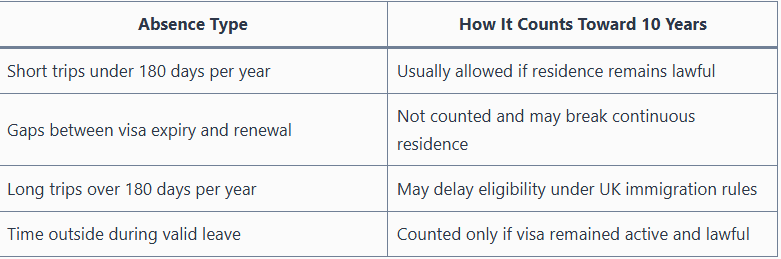
- Eligibility can be delayed by gaps or heavy travel, necessitating cautious planning.
How changing visas impacts your ten-year term
Switching visas can count towards the UK 10-year rule for skilled workers, but only if every stay is valid and continuous under the new UK immigration rules for work visas. This implies your time does not reset simply because you changed categories.
However, each changeover must adhere to the proper procedure due to the long residence route UK adjustments implemented under the new settlement policy in the UK in 2025. If a gap exists between visas, that period may not contribute towards the ILR criteria for skilled workers in the UK.
Therefore, the UK skilled worker visa settlement track is still a possibility if you intend to change jobs or industries. However, in order to prevent exceeding your 10-year period, make sure your next visa is granted before the current one expires.
Breaks in residence and how they are computed
Breaks in residency are carefully counted under the UK’s new settlement policy in 2025, particularly for skilled workers who depend on the UK 10-year rule. In order for time spent abroad to count towards the ILR requirements for skilled workers in the UK, it must adhere to the most recent UK immigration regulations for work visas.
Now, the long residence route UK reforms make it plain that repeated absences might delay qualifying. If you are on the UK skilled worker visa settlement pathway, keeping track of travel important more than ever, especially if your journeys are frequent or long.
Impacts on family settlement routes and dependents
Depending on when each family member is eligible to settle in the UK, dependents may not necessarily adhere to the same schedule as the primary applicant.
- Partners normally need to meet their own qualifying period. As such, they may wait longer if the lead applicant shifts from the five-year path to extended residency.
- Depending on their age and place of residence, children born in the UK may be eligible earlier.
- Later-joining dependents may require more time to apply.
Benefits and Drawbacks for Skilled Workers
For many professions, the new 10-year rule comes with both positive and challenging outcomes depending on your long-term goals in the UK. Some skilled workers may benefit from having more visa flexibility, while others may feel unclear about how these changes affect their settlement path.
At the same time, the update has prompted a closer look at career stability and timing, especially for persons considering work moves or further study. Knowing how to weigh the advantages and disadvantages allows you to plan with confidence and avoid being taken off guard.
Benefits of the lengthy residence route
- It permits time spent on separate visas to contribute towards settlement, which can aid those who have studied, transferred careers or had multiple roles in the UK without restarting their timeline.
- For skilled workers who do not fit the typical five-year track because of employment changes, sponsorship problems, or time spent on visas that do not immediately lead to settlement, it provides flexibility.
- For applicants who encounter unforeseen delays, it might act as a safety net, offering them a different path rather than losing ground.
- It helps long-term UK residents who have developed close relationships in their personal, professional, and social spheres over a number of years.
Problems brought forth by the longer settlement period
- Waiting ten years instead of five might delay important plans like buying property, receiving certain benefits or achieving long-term work stability, which may impair confidence in remaining in the UK.
- Skilled workers may feel confined when changing roles, since sustaining lawful and continuous residence becomes more crucial and any error could reset progress.
- Dependants may face longer timeframes, especially if the main applicant moves away from the usual road, causing uncertainty for families planning their future together.
- Because the longer approach raises the possibility of policy changes over time, applicants must keep informed and ready for any new criteria.
Problems brought forth by the longer settlement period
A longer wait for settlement might affect critical decisions, especially for skilled professionals who expected a faster and more predictable route to stability in the UK.
- Uncertainty may result from postponing important life goals like purchasing a house or relocating permanently.
- In order to prevent disrupting continuous residency, job transfers must be timed more carefully.
- If dependents join later or take a different route, families may encounter different timetables.
- Extended durations enhance the likelihood of future policy revisions, which could result in the introduction of new regulations.
How to Prepare for the 10-Year Settlement Requirement
Preparing early can make the 10-year process smoother, especially if you expect to live in the UK long-term. Maintaining organisation during this phase will make it simple to show your residency history when the time comes.
Now, the goal is not simply achieving the criterion but avoiding mistakes that could delay your application later. You can safeguard your success and remain prepared for any changes in the future by taking little actions now.
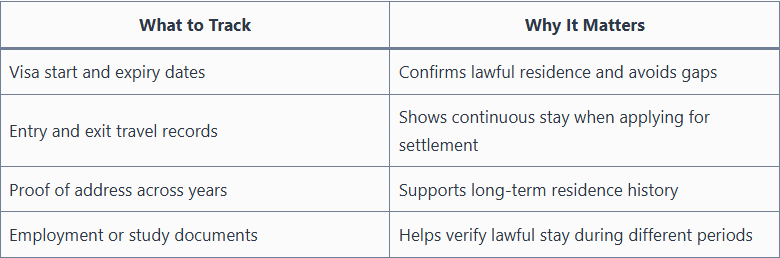
Tracking your lawful residence
Maintaining an accurate log of your stay in the UK facilitates the settlement procedure and eases subsequent stress. Simple practices like preserving visa documents and tracking travel dates will help you stay on track during your residency period.
Additionally, it guarantees that there won’t be any surprises when you apply, particularly if you’ve changed occupations or visas over time. You may demonstrate continuous residency without rushing to find information at the last minute if you remain organised.
What to Track and Why
Documents required for the ILR route of extended residence
Early preparation of the appropriate paperwork can facilitate the long-term residency application and avoid needless delays when you reach the ten-year milestone.
- Passports and BRP cards that cover your complete stay in the UK.
- Proof of address for every year, such as invoices or tenancy agreements.
- letters of employment or study attesting to legal activity within each time frame.
- Travel records demonstrating your arrival and exit dates to support continuous residence.
Things skilled workers should stay away from to avoid delays
Small mistakes might stop your timeline, so knowing what to avoid helps protect your progress towards settlement in the UK.
- Letting your visa expire before renewing or transferring to a new category.
- leaving the UK for extended periods of time without verifying the absence limits.
- Changing employers without changing your visa conditions beforehand.
- Misplacing paperwork that establish valid residence when applying later.
When to seek immigration or legal advice
Reaching ten years in the UK is a huge milestone, and obtaining the correct assistance can help you avoid costly mistakes. Advice is especially essential if you have transferred visas, taken extensive journeys or are unsure whether all your years count.
You should also consider consulting to a professional if your documentation are missing or your situation is complex, such as gaps between visas or dependants with varied schedules. Early support can save time, minimise stress and safeguard your eligibility for settlement.
When looking for immigration or legal guidance
Reaching ten years in the UK is a significant milestone, and expert advice might be beneficial. It is especially important if you change visas, travelled often, or are dubious about qualifying.
You should also seek advice if records are missing or your timeline is complicated. Early support can decrease stress, eliminate delays, and protect your prospects of a successful settlement application.
Options for Skilled Workers in Place of the 10-Year Rule
Certain skilled people can apply for settlement in the UK without having to wait ten years. Depending on your visa type and future goals, you may qualify much sooner.
You can now determine whether the long residence approach is the best course of action by being aware of these possibilities. You can get greater influence over your long-term plans and save time by investigating other options.
5-year Skilled Worker ILR pathway
The quickest and most popular settlement option is still the five-year skilled worker path. After five consecutive years, you can still apply if you still meet the requirements for pay, sponsorship, and residency.
Because it provides a clearer timeframe and fewer uncertainty, this route is frequently chosen. Additionally, it avoids using the lengthy residency route, which, depending on your situation, can take longer.
Global Skill, Health and Care Worker, and other paths
For professionals who are leaders or up-and-coming leaders in their area, the Global Talent route provides a quicker approach. If endorsed, you may qualify for settlement after three years instead of waiting longer under other categories.
For qualified positions in the NHS or other regulated care industries, health and care worker visas also offer a quicker route. This option can be advantageous for professionals who expect to stay in the same field and meet recurring sponsorship criteria.
Some candidates might also think about paths like Minister of Religion, Scale-up, or Innovator. Every pathway has specific requirements that must be fulfilled during your stay, including a settlement timeline.
Your job ambitions, experience, and the speed at which you intend to settle down will all play a role in your decision. You can stay on the best course and prevent delays by being aware of every alternative.
Changing to visa categories that settle more quickly
By switching to a visa that provides a shorter route, certain skilled workers may shorten the time it takes for them to settle. The secret is to change while continuing to live legally and fulfilling all requirements for the new category.
Before changing visas, it is crucial to understand the procedures, processing timeframes and long-term repercussions. Planning ahead helps you avoid gaps, protect your progress and move confidently towards settlement without starting over.