


Another Shocking Update: UK Government to limit skilled migration. The Home Secretary is thinking about restricting the amount of foreign workers that businesses can hire for positions where there is a formal shortage.
In an effort to lower net migration, Labour intends to restrict the number of highly qualified foreign workers that businesses are permitted to hire from overseas.
Home Secretary Yvette Cooper has requested that a group of experts examine the possibility of imposing a monthly or annual cap on the number of qualified workers hired from abroad for positions where there is a recognised shortage.
The measures, which aim to cut net migration by at least 60,000 per year, will also prohibit companies from hiring foreign workers if they do not train UK residents to fill skills shortages.
In an interview with The Telegraph, Prof. Brian Bell, the head of the Migration Advisory Committee, disclosed the plans.
He is a member of the new Labour Market Evidence Group (LMEG), which Ms. Cooper established to advise her on how to force UK companies to train British workers in order to reduce their reliance on cheaper overseas labour.
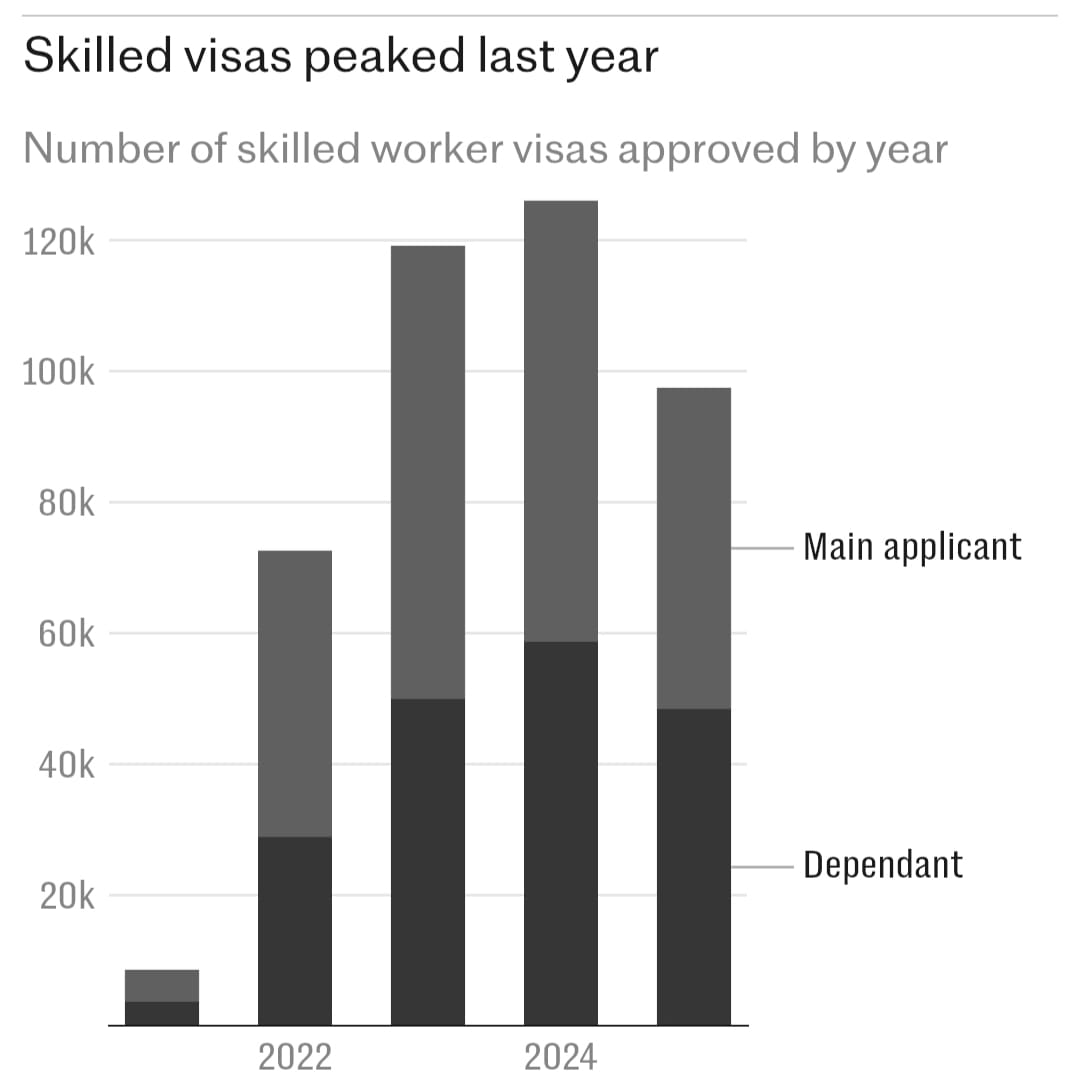
One possible argument, according to Prof. Bell, is that in addition to creating a new temporary shortage list, you should also establish a strict cap on the number of people who can travel that route. That is possible.
The idea of considering how to ensure that there is some kind of emergency stop is undoubtedly appealing to the Home Secretary. Although I don’t think this will happen, there is a chance that if you put 50 vocations [on the temporary shortage list], they may suddenly go crazy with recruitment.
Similar policy plans from Reform and the Conservatives would be thwarted by an immigration cap. While Kemi Badenoch has suggested a yearly cap on the number of migrants, which would be approved by Parliament annually, Nigel Farage has pledged to implement a “net zero” immigration policy.
The rule that foreign workers can only enter the UK for graduate-level or above positions is at the heart of Ms. Cooper’s shake-up. This raises the previous A-level cutoff point that Boris Johnson established.
Net migration reached a record 906,000 in the year ending June 2023, a result of Mr. Johnson’s more liberal policies, which included aiming to draw in 600,000 international students annually. Since Rishi Sunak imposed new restrictions on work and student visas, it has dropped to 431,000.
By the end of next year, 120 non-graduate occupations, such as retail and culinary, risk being automatically prohibited from hiring foreign workers due to Ms. Cooper’s increased criteria.
However, as long as they devise plans to train Britons for the positions, up to 60 additional non-graduate occupations that are thought to be essential to Labour’s industrial strategy and preserving Britain’s vital infrastructure will be temporarily exempt from this prohibition.
Welders, electricians, plumbers, construction workers, auto mechanics, boat and ship builders, painters, decorators, and data analysts are among the anticipated 60 jobs.
The carrot-and-stick method
Prof. Bell stated that in order to be permitted to hire qualified foreign workers to fill shortages, these job sectors would need to create “sensible” and “deliverable” strategies for training British people.
He threatened to revoke their ability to hire foreign workers if they were unable to provide these training packages. If a sector says, “We’re going to train 10,000 bricklayers,” and they only train 100, “we’ll be really unsympathetic,” he added. “Well, tough, you’re on your own now.”
Because you have consciously chosen not to invest in educating British workers, you are unable to obtain migrant workers. You will have to live with the repercussions of your decision.
Businesses must have definite plans in place that they can deliver on, or else the immigration path would be blocked. A carrot and a stick are involved. The immigration system can assist you and facilitate that transfer if you’re doing the proper things and training British employees will only take time.
“But there’s a stick there that says it will be shut down if you don’t do the work you need to do on skills and training.”
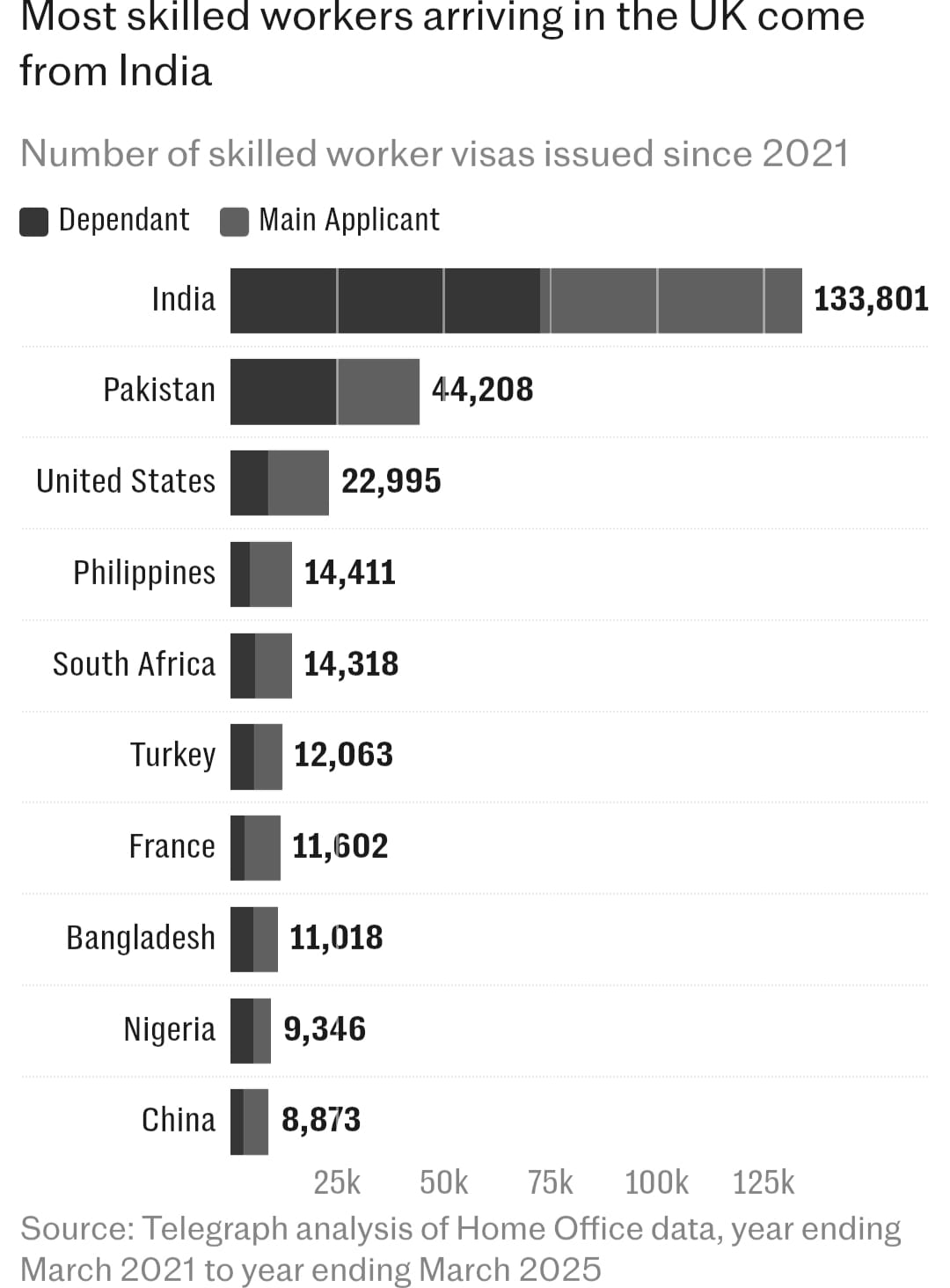
In order to stop companies from undercutting market pay rates by using cheaper immigrant workers, Prof. Bell stated that the government would also establish salary thresholds in each of the employment categories experiencing a shortage.
“We really want to make sure you’re incentivised to train domestically and if you’re saying that the problem is that you can’t get these workers and they’re crucial to what you’re doing well, you might pay a bit more for that,” he added, adding that these might be set above market rates.
Additionally, he cautioned the 120 occupations that were prohibited from hiring foreign workers, telling them to “start recruiting domestically,” train UK employees, and think about automating additional positions.
“Those 120 have no access to the immigration system. Their odds of being on the list are zero. He declared, “The Home Secretary will not turn back.”
According to Prof. Bell, the LMEG will assess which occupations should be permitted to hire skilled workers from overseas over the course of the following 12 months. According to him, this would depend on whether they had workable training plans for British workers, experienced actual shortages, and were “crucial” to Labour’s industrial strategy.
He proposed further narrowing down some of the occupations on a current “interim” list of 60 shortage occupations, like human resources professionals. Visa renewals will be permitted for skilled workers who entered under the previous points system.
As part of its white paper crackdown on immigration, the Home Office has not yet stated whether they will be able to claim indefinite leave to remain after five or ten years.
Source Credits: Telegraph UK