

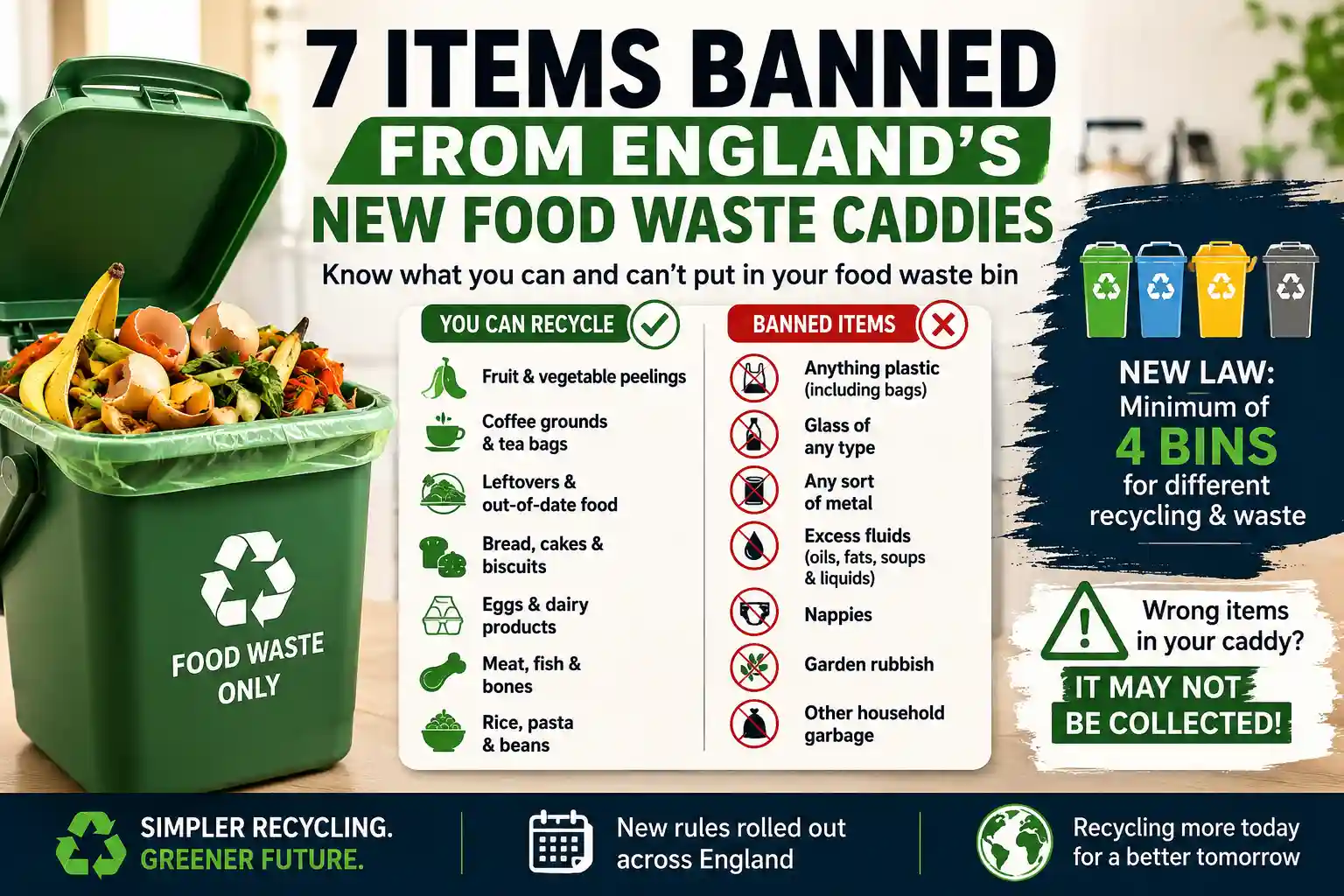
7 Items Banned from England’s New Food Waste Caddies (Including Some Foods).
Under the proposal councils should have introduced guidelines so residents will have a minimum of 4 containers for different recycling and garbage.
New laws have seen garbage caddies rolled out across most of England, banning householders from putting several everyday objects in them. The reform, which is currently in force, is part of the Simpler Recycling project and aims to increase recycling rates and reduce the quantity of garbage sent to landfill or incineration.
Councils should have introduced rules under the scheme that require people to have a minimum of 4 bins for different recycling and waste – food and garden waste, paper and card, all other dry recyclable materials (glass, metal and plastic, including cartons) and residual waste (non-recyclable waste that is sent for energy recovery or to landfill).
Some municipalities have not met the deadline but all should have it in place by the end of the year. One of the biggest changes is with food waste – but regulators have warned individuals could be penalised for placing the wrong things into the new caddies – and various food items include beverages, oils, fats and soups are banned.
People can recycle food waste in caddies:
- Peelings of fruits and vegetables
- Coffee grounds and tea bag
- Out-of-date food and leftovers
- Cakes, biscuits and bread
- Eggs and dairy products
- Flesh and bone
- Rice, pasta, beans.
Councils will normally include a roll of caddy liners with your caddy pack, which we suggest you put in your kitchen caddy before you start filling it. When it is full users are instructed to put it in the outside caddy.
Don’t pack your caddies with the following:
- Anything plastic (you can use your caddy liners)
- Glass of any type
- Any sort of metal
- Excess fluids (oils, fats, soups and liquids)
- Nappies (Nappies)
- Garden rubbish
- Other typical household garbage
“Generally councils are saying if the wrong items are in the caddy they will leave it behind. “Simpler Recycling is the biggest shakeup in recycling policy in England in twenty years. The food waste change is hoped to make the most difference,” said Claire Shrewsbury, Director Insights and Innovation at climate action NGO WRAP. And now you may get the same service wherever you are, at home, at work and on the move.
“We are a country of recyclers, but confusion means that most households put two or more items in the rubbish each week that could be recycled. Easier recycling would help eliminate this because if we all recycled one extra trigger spray each week, we’d save enough energy to power every home in Birmingham for a year.
‘We’ll get the huge win on food waste. Avoiding all food waste is challenging, but recycling one kitchen caddy of unavoidable food waste could run your fridge for 18 hours, and an entire truck would keep your fridge cool for five years. “Recycling is good for the environment and the economy, and Simpler Recycling will make things easier for us all.
“We are ending the bin collections postcode lottery and making it easier for people to recycle wherever they live,” said Circular Economy Minister Mary Creagh.
“Getting rid of these rules will take carbon out, improve our streets and help bring pride back into our communities.
“We will continue to work hand in glove with local areas to deliver these changes and ensure there’s more recycled content in the products we buy.
Local rules vary according to local authorities. Visit your local authority’s website to find out your local rules.