

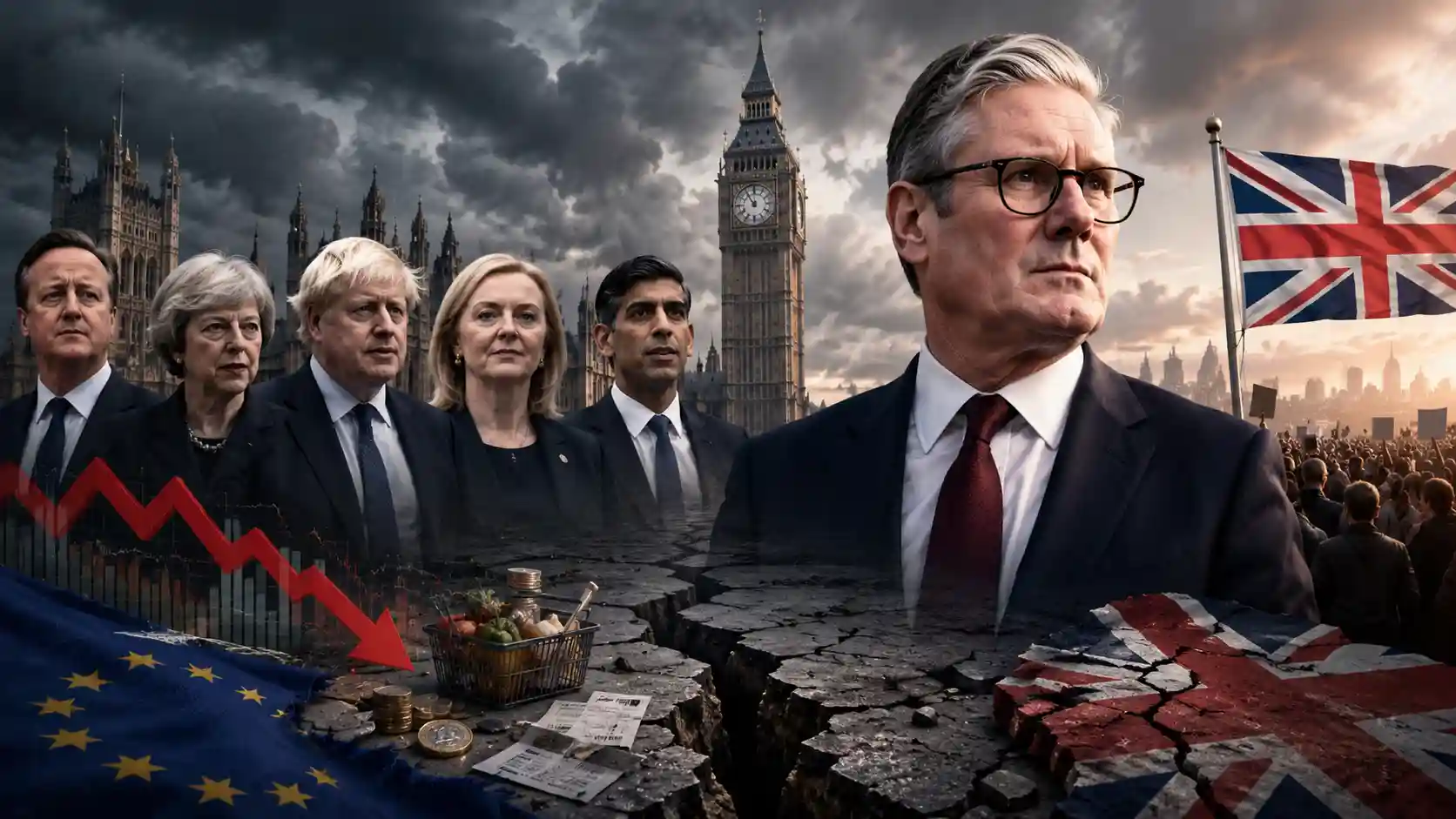
Britain’s Political Stability Faces Growing Pressure
For much of modern history Britain has been a paragon of political stability. Often, the leaders in office for years, shepherding the country through times of change with relative continuity. But that image has radically transformed during the last decade. Britain has had a series of prime ministers at breakneck speed, raising significant doubts about whether the country’s political system can still deliver stable governance.
Britain has seen an extraordinary number of leaders in barely a decade, from David Cameron to Theresa May, Boris Johnson, Liz Truss, Rishi Sunak and now Keir Starmer, under increasing pressure from his own party. The speed of the transition has left many citizens frustrated, unsure, and more cynical about politics.
Economic Crises and Brexit Fuel Political Uncertainty
This crisis is driven by a succession of interconnected economic and political shocks. The 2008 global financial meltdown hit British confidence and the economy hard. This has been a feature of recent times – pay stagnation for many households, the squeeze on public services from financial pressure and the steep rise in the cost of living. Brexit added to the burden, generating political divide and economic uncertainty. The COVID-19 pandemic and the war in Ukraine boosted inflation and economic instability.
These crises have increasingly hampered the government of Britain. “Time is running out for successive prime ministers to come up with convincing solutions. Public patience is wearing thin. Today’s leaders have to explain precisely how they are going to make people’s lives better, as well as manage crises, says political scientist Ben Ansell. But many recent prime ministers have not been able to articulate a vision for the country that inspires belief.
Conservative Governments Struggled With Repeated Setbacks
Each Conservative government of the post-2010 period has been blighted by a major setback. David Cameron’s austerity measures promised economic recovery but did not provide significant long-term growth. Theresa May got trapped in Brexit talks and lost power when she couldn’t get Parliament to endorse her policies. His enthusiastic approach and pledges to “get Brexit done” made Boris Johnson initially popular, but scandals gradually shattered confidence in his leadership. Liz Truss’s unfunded tax cuts destabilised financial markets, causing the instability that followed her brief tenure as prime minister. Rishi Sunak inherited a fractured party and a weary electorate, so election defeat was always going to be hard to prevent.
But Keir Starmer’s Labour administration has its own challenges now, despite securing a big parliamentary majority in 2024. Mr Starmer has failed to carve himself a distinct political identity or to give voters a reason to believe in him, his critics say. There have been some advances, including growth inside the National Health Service and better relations with European allies but many voters are unconvinced that the administration has a strong direction or vision for Britain’s future.
Fragmented British Politics Weakens Stability
Another key cause for the instability is the changing structure of the British political system. For decades, British politics was dominated by two parties, Labour and the Conservatives. That dominance has waned today. The vote has been fractured by smaller parties such as the Liberal Democrats, Greens, Reform UK and nationalist groups in Scotland and Wales. Britain’s first-past-the-post electoral system, mostly designed for a two-party system, currently struggles to deal with this more fractured political landscape.
As a result, governments can gain big legislative majorities with only a small percentage of the popular vote. Take Labour in 2024, for example, when it romped to a crushing majority in parliament with just a third or so of the votes cast. This raises problems of legitimacy and leaves governments exposed to swift reductions in popularity.
Public Trust in UK Politicians Continues to Decline
Confidence in politicians has likewise plummeted among the public. Polls in the last few decades have revealed an increasing unhappiness not just with governments but with prime ministers as individuals. Voters seem less inclined to forgive blunders, scandals or economic hardship than in past generations. The replacement of a prime minister was previously seen as a way to restore popular trust, but now rarely alters the general unhappiness with the governing party itself.
This produces a political culture where prime ministers are like to football managers, under intense scrutiny, and readily blamed and fired. Changes in leadership, which used to be associated with great national crises, are now taking place with growing frequency.
Is Britain Becoming Ungovernable?
But despite these problems many analysts dismiss the idea of Britain being ungovernable. Rather, they say, the country is suffering the compound effect of economic stagnation, political division, diminished public trust and successive leadership breakdowns. The British institutions are intact but the strain on its leaders has been greater than it has been for a while.
The future of stability under new prime ministers will depend on economic recovery and on their ability to re-establish trust, provide a credible national vision and adapt Britain’s political system to a more fractured and demanding electorate. Until then, the cycle of presidents with short tenures and political uncertainty could go on.