

New cost-of-living plan : Government Unveils New Measures to Ease Household Costs
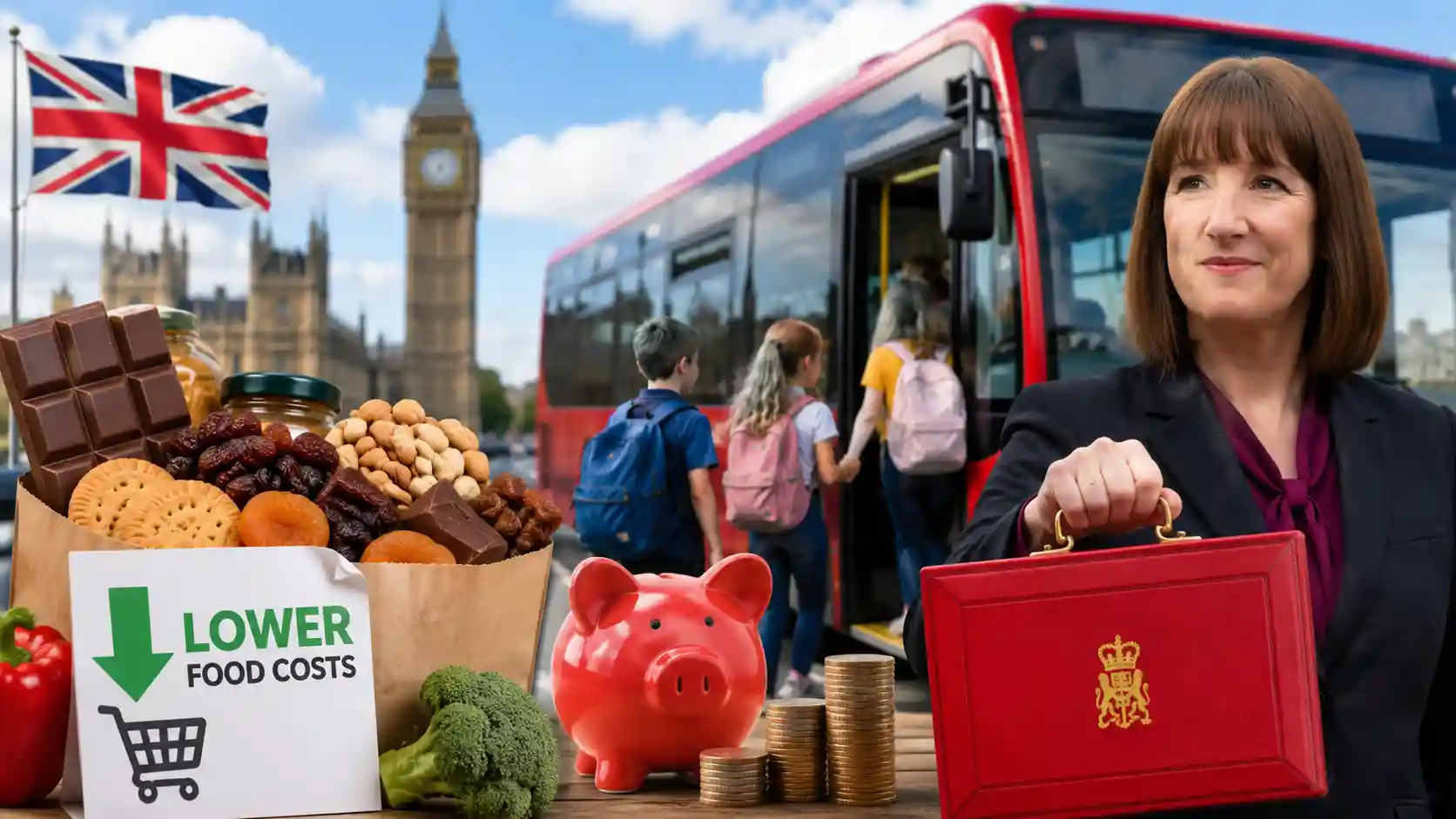
The UK Government has announced a major new cost-of-living plan support package aimed at helping families manage rising expenses. Chancellor Rachel Reeves is introducing measures designed to reduce pressure on household budgets, including cheaper food imports and free bus travel for children during the summer holidays.
Rachel Reeves is to give out steps to lessen the pain of the Iran conflict, which may see shoppers save money on biscuits and chocolate.
The Government is slashing import taxes on more than 100 products, a move that is set to save customers more than £150 million a year.
The Chancellor also announced a “Great British Summer Savings” plan that will see free bus travel for youngsters in England during the August school holidays.
Cost-of-Living Crisis and Energy Price Concerns
Ms Reeves will set out plans to respond to the cost-of-living crisis caused by Donald Trump’s conflict in the Middle East in the Commons on Thursday but is not anticipated to provide immediate help with spiralling energy costs.
The household energy price cap will go up by £209 a year from July after the closing of the Strait of Hormuz sent global oil and gas prices soaring.
Ms Reeves may provide additional details of her contingency planning but is anticipated to wait until September before finalising any package of targeted support for households over the winter months, when more energy is needed.
The move to suspend tariffs on some food imports is part of a broader government attempt to tackle increasing costs.
The entire list of products is scheduled to be revealed next week and should include biscuits, chocolate, dried fruit and nuts.
Treasury Comments on Food Price Reductions
Lucy Rigby, chief secretary to the Treasury, refused to “speculate” on how much the policy may shave off the price of the foods.
“We can’t be precise about that because obviously it depends how supermarkets price things,” she told BBC Radio 4’s Today programme on Thursday.
She claimed temporarily suspending the levies would cost the Exchequer about £40 million.
Free Bus Travel for Children Across England
Prime Minister Keir Starmer said: “We know many hard working families are still feeling the squeeze and too often think they have to hold back.
“By providing free bus travel for every child in August and reducing tariffs on everyday food items, we’re putting money back in people’s pockets and making life that bit easier.
“This government is focused on the practical steps that help right now – easing the pressure on household budgets, supporting parents during the school holidays and backing British businesses.
Every child aged between five and 15 in England will be able to travel on local routes under the free bus travel plan.
The Chancellor is providing more than £100 million to fund the free fares plan and support bus services facing rising costs.
“My number one priority is to protect households from rising costs,” Ms Reeves added.
“This summer I want to see every family able to enjoy themselves and that is why we are launching the Great British Summer Savings Scheme and why we are helping kids with free bus travel throughout August.
“With the war in Iran driving up prices here at home, my economic plan is the right one. “I will continue to make the right choices, to protect households and businesses, and build a stronger and more secure Britain.
Fuel Duty Extension and Economic Measures
The latest package builds on the Government’s announcement of an extension to the 5p cut in fuel duty until the end of the year, as well as a tax break for hauliers and aid with red diesel expenses for farmers.
Ms Rigby did not dispute rumours that Ms Reeves could announce an increase to the 45p-per-mile fee, which has not increased since 2011.
The Office for National Statistics (ONS) announced Consumer Prices Index (CPI) inflation dropped to 2.8% in April, from 3.3% in March — the lowest level since March 2025.
This was partly down to regulator Ofgem slashing the energy price cap by 7% or £10 a month from the start of April for the average household using both electricity and gas, brought down by Government attempts to reduce bills.
Inflation and Energy Prices Expected to Rise Again
Inflation is likely to rebound with the war in the Middle East, which has sent fuel costs higher and the energy price cap is forecast to rocket when it is next reviewed in July.
The energy analyst Cornwall Insight now forecasts Ofgem’s cap for July to September to be £1,850 for a typical dual fuel family, up 13% on April’s annual cap of £1,641.
Ministers are leery of a universal rescue for all households, Liz Truss-style, saying that unfunded giveaways might lead to increased government borrowing costs and inflation, feeding through to higher mortgage rates, which would end up leaving people worse off.
Ms Rigby told Sky News: “The Chancellor was clear that she wants to watch and then she’s going to intervene in a targeted way if the circumstances demand it.
The Chief Secretary to the Treasury said Ms Reeves “is not going to rush into any sort of universal action” that was “hugely costly to the taxpayer” under the last Tory government.
Opposition Criticism Over Economic Policy
Conservative shadow chancellor Mel Stride said: “I don’t think it’s going to make a huge difference if a packet of peanuts is a bit cheaper or a chocolate bar is a bit cheaper than it would otherwise have been.
‘These (cost of living) challenges have been created by the decisions that the Chancellor has taken. She raised taxes especially on businesses and that fuelled inflation, slowed the economy, and borrowed a lot of money, which has fuelled inflation as well. And we’re really in a very weak and fragile situation just as we’re moving into more difficulties now with the Middle East and oil and petrol costs going up.”
Conclusion
The UK Government’s latest cost-of-living measures aim to provide immediate relief for families facing rising expenses due to global conflicts and inflation pressures. With cheaper imported food products, free bus rides for children, fuel duty support, and targeted economic planning, the Government hopes to reduce financial pressure on households while avoiding broader inflation risks. However, opposition parties continue to question whether these measures will be enough as energy prices and inflation remain major concerns for millions across the UK.