

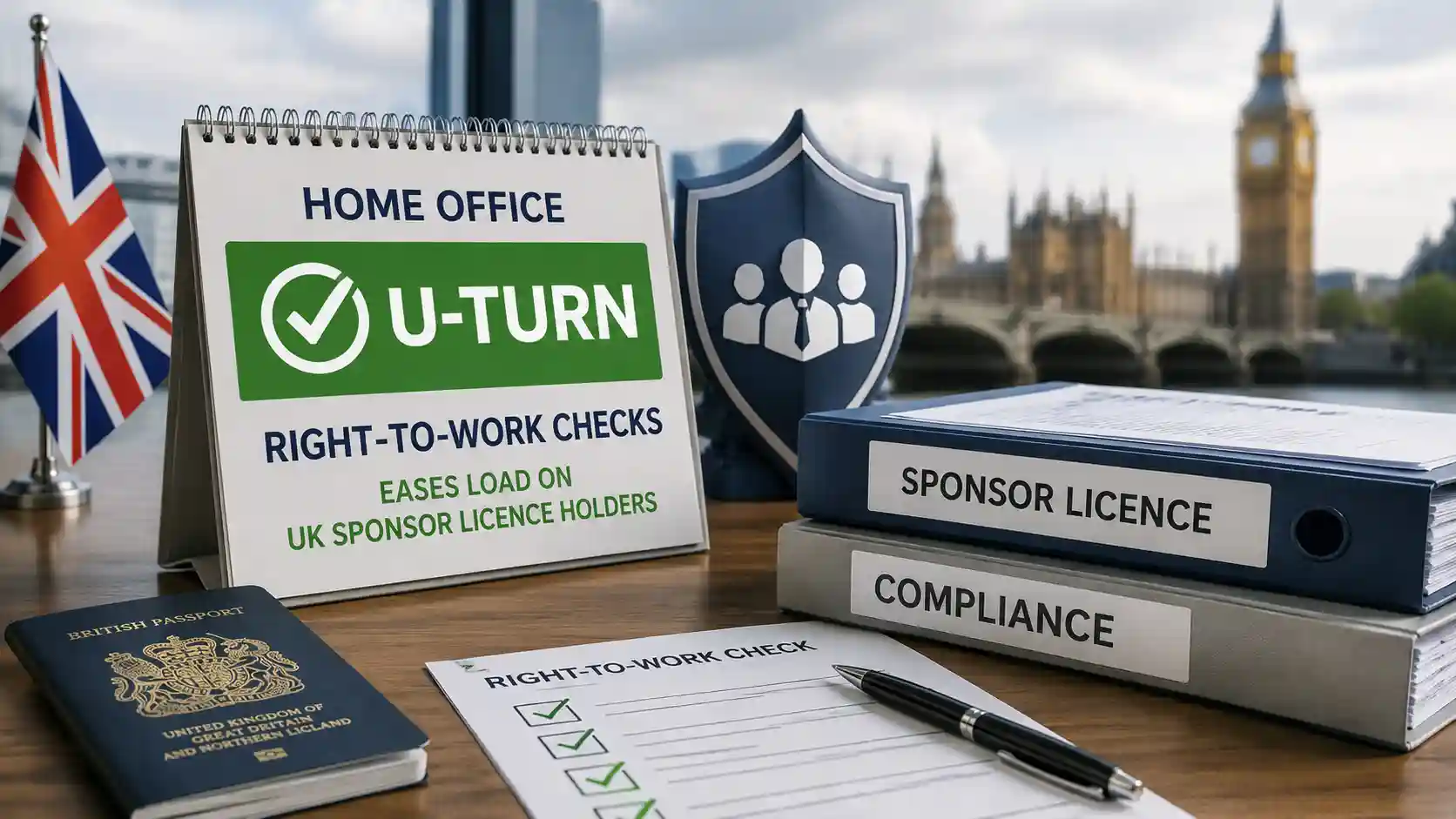
UK sponsor licence right-to-work checks: UK Home Office Reverses Controversial Right-to-Work Guidance
UK sponsor licence right-to-work checks: An immigration lawyer, Ross Kennedy, issued a press statement on 27 May confirming that the Home Office has scrapped its controversial guidance – issued only in March – on the need for employers with a sponsor licence to carry out right-to-work checks on any individual they “directly engage”, including contractors.
The reversal, issued in revised guidelines on 20 May and reiterated this week, puts sponsors back in the pre-March position: they need to monitor sponsored workers and their direct employees exclusively.
HR and mobility teams reacted angrily to the restrictions, introduced in March, warning that asking sponsors to vet self-employed tradesmen or short-term consultants generated impossible compliance risks and potential licence suspensions.
Kennedy reports that the Home Office agreed the move would have compelled sponsors to police immigration status much beyond their work relationship, which would defeat the proportionality principle on which the civil-penalty scheme was based.
The U-turn is directly relevant for international firms moving people to the UK.
Impact on UK Sponsor Licence Holders and Overseas Recruitment
Companies who halted onboarding of overseas assignees while they audited supply-chain interactions can now get back to normal operations.
However, the revised sponsor-guidance pack extends record-keeping obligations: sponsors must keep documentation of right-to-work checks for all employees, not only sponsored workers, so the requirement for good document-management systems is even greater.
Legal advisers suggest firms update internal onboarding checklists, ensure line managers are clear on the reduced scope of checks and check that any automated identity verification methods comply with GDPR and Equality Act limits.
Although the policy has been lifted, the Home Office has indicated that it would continue with high-profile enforcement campaigns over the summer, so audit preparation is still vital.
Officials will be asked to discuss a digital “Right-to-Work Ledger” – an enlargement of the Home Office’s online share-code system – which might eventually bring back wider checking obligations in a less demanding form.
What This Means for UK Employers in 2026
The latest Home Office U-turn offers major relief for UK sponsor licence holders, HR departments and international employers managing overseas workers. Businesses can now avoid the expanded burden of checking contractors and temporary consultants while still maintaining compliance for sponsored employees and direct staff.
At the same time, employers must continue strengthening record-keeping systems, preparing for compliance audits and staying updated with future digital right-to-work verification changes expected from the Home Office.
For companies sponsoring overseas workers in the UK, maintaining strong immigration compliance procedures remains essential despite the policy reversal.
Conclusion
The Home Office’s decision to reverse the March right-to-work guidance marks an important change for UK sponsor licence holders. While businesses regain operational flexibility, the government continues to emphasize strict compliance monitoring, document retention and enforcement activity.
UK employers, HR professionals and global mobility teams should continue reviewing their sponsorship compliance systems carefully to avoid future risks and ensure smooth overseas recruitment operations.