

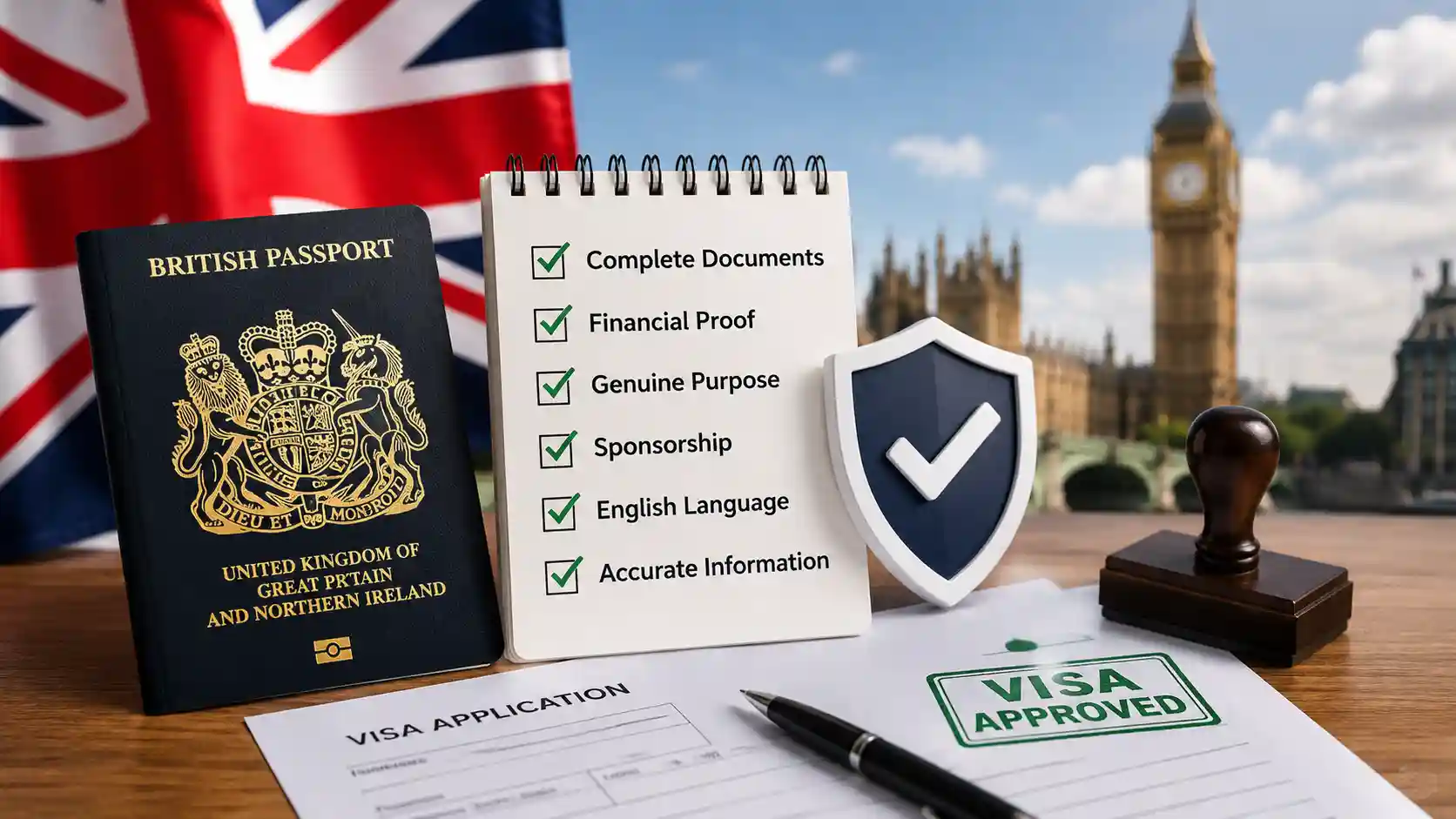
Introduction
UK Visa Rejection: Applying for a UK visa can be an exciting step towards studying, working, visiting relatives or making a new life in the United Kingdom. However, every year numerous visa applications are rejected because of faults that may be avoided. A visa refusal might cause financial loss, delays and future application problems.
The good news is that most visa refusals may be avoided with diligent preparation and attention to detail. Paying attention to the following crucial factors might help you to boost your possibilities of getting a good UK immigration decision greatly.
1. Give Honest & Accurate Information
One of the most common causes for denial of a UK visa is the submission of false or misleading information. Your application should be consistent with your accompanying documentation.
Before you submit your application:
- Verify all personal information.
- Check names, passport numbers and dates
- If applicable, declare previous visa refusals.
- Answer all questions truthfully.
False information can result in an immediate refusal and may impact any future immigration applications.
2. Supporting Documents Finalised
Lost documents are one of the most frequent reasons for refusal. UK immigration agents use papers to check the information you give in your application.
Depending on your visa category, you may need to:
- Passport (valid).
- Financial statements
- Job letters
- Academic certificates
- Sponsorship papers
- Accommodation information
- Evidence of relationship where appropriate
Ensure all essential documents are uploaded accurately and are clear and legible.
3. Meet Financial Standards
Many visa types require applicants to demonstrate they have adequate funding. Not meeting financial requirements may result in a denial.
Make sure that:
- The bank statements cover the requested period.
- There are funds available for the appropriate duration.
- I can see your name and account details on the documents plainly.
- Financial proof for present immigration laws in the UK.
Avoid big unexplained accumulation that can raise red flags at evaluation.
4. Make it clear you mean it
Visa officers have to be satisfied that your reason for going to the UK is genuine.
For instance,
- Students must explicitly state what they plan to study.
- Employees should show real evidence that they are employed.
- Visitors will be asked to state the purpose of their visit and their plan to leave following the visit.
Strong supporting evidence builds credibility and eliminates uncertainty when you apply.
5. Make Sure Your Sponsor Is Qualified
If your application is sponsorship based, your sponsor must meet all relevant standards.
Job Visa:
- Check your employer has a valid sponsor licence.
- Check your Certificate of Sponsorship data are correct.
For family visas,
- Ensure that the relationship evidence is complete.
- Verify that the sponsor satisfies financial and accommodation needs.
Mistakes made by sponsors might damage visa applications.
6. Check Your English Language Requirements
Some visa types demand proof that you can speak English.
Before you apply:
- Verify whether an English test is needed.
- If necessary, use an approved test provider.
- Make sure your test results are current when you apply.
You may be refused even if you meet all the other criteria if you do not meet the language standards.
7. Explain Any Special Circumstances
If you have work gaps, past immigration problems, changed financial circumstances or other exceptional circumstances please explain clearly.
A good cover letter can help immigration officers comprehend your situation and decrease uncertainty during assessment.
8. Review your application before submitting it
Many applicants speed through the last screening stage and miss faults.
Before you submit:
- Check each part thoroughly.
- Check the documents you uploaded.
- Check all dates are correct.
- See the financial evidence.
- Make sure information is consistent across the application.
A careful assessment can avoid simple mistakes that lead to refusal.
9. Keep Updated on Immigration Rules
UK immigration policies are frequently updated. Last year’s requirements may not be in place now.
Please always check the latest guidance before you submit your application and make sure your papers meet current standards.
10. Seek professional advice when needed
You may need professional help for complex immigration matters.
If you have: You may want to get advice
- visas refused previously
- Immigration issues
- Convictions for crimes
- Financial issues
- Troubled family situation
Professional counsel can help uncover problems in an application prior to submission.
Summary
A UK visa refusal is usually preventable. Submitting full documentation, offering accurate information, completing financial requirements and carefully examining your application can greatly boost your chances of success.
Preparation is the key to a successful UK visa application. Looking after the details before you send your application will save time, money and stress and improve the chances of a good decision.