

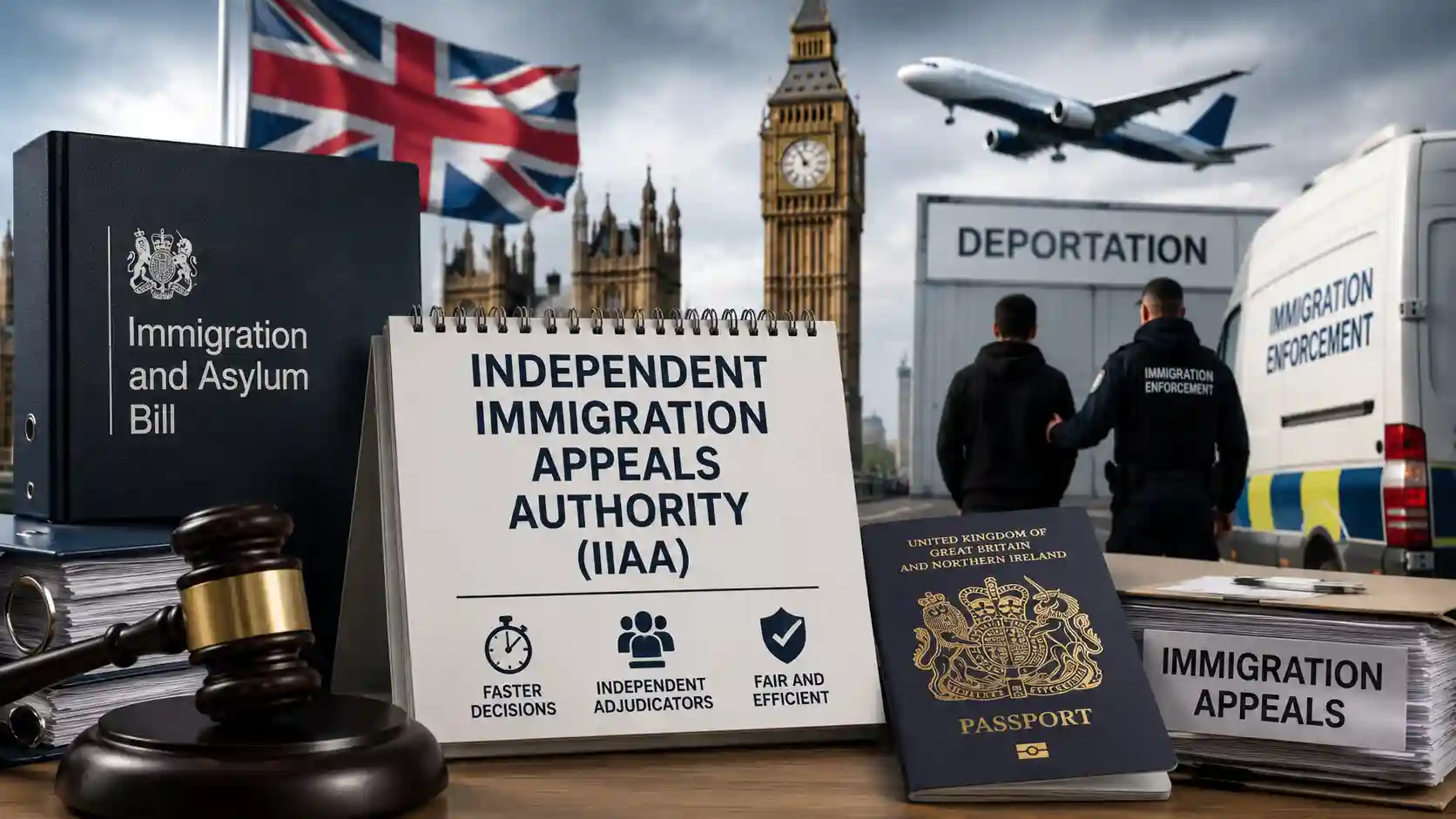
Government Will Establish Independent Immigration Appeals Authority to Speed Up Deportation
The Independent Immigration Appeals Authority (IIAA) was announced on 30 June as yet another pillar of the Immigration and Asylum Bill. The new organization will supersede the existing two-tier tribunal system and merge a number of routes of appeal into one speedier track.
The Home Office estimates that there are over 150,000 immigration and asylum appeals waiting to be heard, with an average clearance time of 61 weeks. Ministers want to give the IIAA the option to prioritise high-harm foreign offender cases and “clearly unfounded” claims to speed up removals and cut accommodation expenses.
The IIAA will start to hear cases in late 2027 and will be staffed by independently nominated adjudicators, who can be increased or decreased in number based on caseload. All claims, including human-rights, asylum and protection claims, must be made at the same time, ending the existing practice of ‘sequential claims’ that can prolong removal for months or years.
The change matters to global-mobility managers in two ways. First, international assignees with cut short visas will have less opportunities to extend their stay through lengthy appeals. Secondly, sponsors of skilled workers will have to assure total compliance because Home Office adverse rulings could lead to deportation much faster when the single-route system goes online. The need for prompt filing of an administrative review and early legal intervention will only grow.
Legal scholars have warned that the mix of grounds of appeal could lead to a concentration of discretion in first-instance decisions. Companies that rely substantially on sponsored workers should plan to budget for proactive compliance audits and training, so that status issues are identified well before any enforcement action is taken.
The IIAA will require main legislation and observers expect a heated discussion on protections and resourcing in Parliament. But few expect the reform to be reversed, given the political premium on visibly tighter border controls before the next general election.
Understanding the Independent Immigration Appeals Authority (IIAA)
The proposed Independent Immigration Appeals Authority (IIAA) represents one of the most significant reforms to the UK’s immigration appeals system in recent years. By replacing the current two-tier tribunal structure with a streamlined single-track process, the government aims to reduce lengthy delays, accelerate deportation decisions, and improve the efficiency of immigration case management.
The reforms are expected to affect migrants, asylum seekers, skilled workers, employers, immigration lawyers, and businesses that rely on international talent.
Why the Government Is Reforming the Immigration Appeals System
The UK currently faces a substantial backlog of immigration and asylum appeals, with more than 150,000 cases awaiting hearings and average waiting times exceeding one year.
According to government plans, the new authority will:
- Speed up immigration appeals.
- Reduce tribunal backlogs.
- Prioritise serious foreign offender cases.
- Fast-track clearly unfounded claims.
- Lower taxpayer-funded accommodation costs.
- Simplify the appeals process.
Key Changes Under the New IIAA
Some of the biggest proposed changes include:
- Replacement of the existing two-tier tribunal system.
- A single immigration appeals route.
- Simultaneous submission of all asylum, human rights and protection claims.
- Elimination of sequential appeals that delay removals.
- Independent adjudicators appointed according to workload.
- Faster deportation decisions for unsuccessful applicants.
Impact on Skilled Workers and UK Employers
The reforms could significantly affect employers sponsoring overseas workers.
Businesses sponsoring Skilled Worker visa holders may need to:
- Strengthen immigration compliance.
- Carry out regular internal compliance audits.
- Ensure sponsorship duties are fully met.
- Seek early legal advice where immigration issues arise.
- Prepare for faster Home Office enforcement decisions.
Employers may face greater pressure to resolve immigration status issues before enforcement action begins.
What This Means for Visa Holders
International workers and migrants should be aware that:
- Appeals may be heard much faster.
- Opportunities to delay removal through multiple appeals could be reduced.
- Administrative reviews may need to be submitted promptly.
- Early legal advice will become increasingly important.
Parliamentary Approval Still Required
Although the government has announced the Independent Immigration Appeals Authority, the reform still requires primary legislation before becoming law.
Parliament is expected to debate issues including:
- Legal safeguards.
- Judicial independence.
- Funding.
- Resources.
- Protection of appeal rights.
Despite anticipated political debate, many observers believe the reforms are likely to proceed due to continued government focus on stronger immigration enforcement and border control.
Conclusion
The proposed Independent Immigration Appeals Authority marks a major overhaul of the UK’s immigration appeals framework. With faster case processing, a single appeals route, and greater emphasis on rapid removals, the reforms could reshape how immigration disputes are handled across the UK. Employers, visa holders, immigration professionals, and sponsored workers should closely monitor the progress of the legislation and prepare for the operational changes expected before the IIAA begins hearing cases in late 2027.