

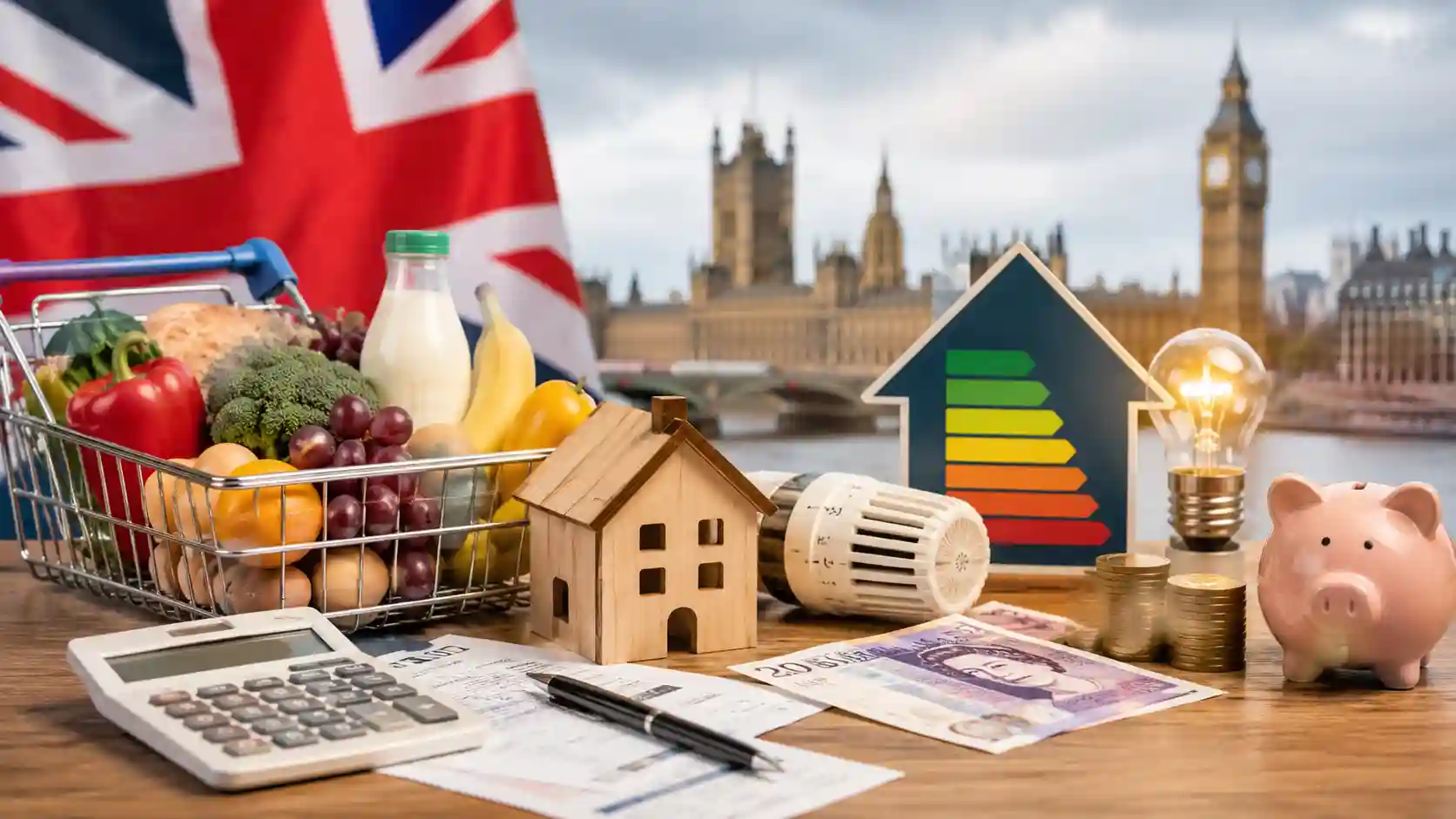
UK Cost of Living 2026: All the Latest Updates Impacting Every Household
The UK cost of living in 2026 remains one of the biggest financial concerns for millions of households. Although inflation has slowed compared to previous years, the prices of everyday essentials such as food, energy, housing, transport, insurance and household services remain significantly higher than before the cost-of-living crisis.
This comprehensive guide explains the latest UK cost of living updates for 2026, why prices remain high, how different households are being affected, what government support is available, and practical ways to reduce everyday expenses.
UK Cost of Living 2026: All the Latest Updates Impacting Every Household
Cost of living remains one of the greatest financial issues for households across the United Kingdom in 2026. Inflation has cooled from the peak of the cost-of-living crisis but millions of households are still feeling the pinch from increasing prices for everyday staples like as food, electricity, housing, transit, insurance and household services. Wages have gone up for a lot of individuals, but the cost of living is still way greater than it was only a few years ago.
Some hints of stabilisation in the UK economy throughout 2026 have been seen but the pressure on household budgets has not gone away. Skyrocketing electricity bills, council tax hikes, rising rents, mortgage payments and food prices continue to hit consumers across the board. If you are a homeowner, tenant, pensioner, student or working professional, being aware of the current changes will help you manage your finances better and prepare for the next months.
This article looks at the latest UK cost of living updates for 2026, explains why prices are still high, reveals the major costs facing households, describes government support that’s available and offers practical ideas to save spending on your regular expenses.
Why the UK’s Cost of Living Will Stay High in 2026
Inflation has eased dramatically compared to prior years, but that does not mean prices are dropping. Inflation is the rate at which prices are rising, not whether goods and services are getting cheaper. So while inflation has eased, the price of many common items remains far higher than before the cost-of-living problem.
There are a number of significant elements which continue to affect household spending across the UK:
- The rise in food prices
- Higher energy bills for households
- Increasing housing costs
- Increases in council tax
- Water bill up
- Cost of shipping
- Rate increases
- More expensive borrowing
- Uncertainty in the world economy
The combined pressures mean that many people still have financial troubles despite gains in the wider economy.
Food Prices Still Squeezing Household Budgets
Food is one of the biggest monthly outgoings for households in the UK. Food inflation has eased compared with recent years but store costs still remain well above what many households were used to before the inflation spike.
“Prices for fresh fruit and vegetables, dairy products, meat, cooking oils, imported goods and packaged foods continue to rise due to supply chain disruptions, transportation costs, labour shortages and global market conditions.
Many households are: to manage grocery bills
- Purchasing supermarket own-label products
- Weekly Meal Planning
- Buying goods during promotional times
- Cutting down on food waste
- Buy in quantity (when appropriate)
- Price comparison between the retailers
Small modifications to your buying habits might add up to big savings over the year.
High Energy Bills Continue to Dominate
Energy continues to be one of the major drivers of rising living costs in 2026.
Wholesale energy costs have been relatively more steady than in recent years, but many people are still paying a lot more for electricity and gas than before the energy crisis.
Higher standing charges, seasonal demand and global energy markets continue to hit household budgets.
Many households are fighting back by making their homes more energy efficient, by:
- Better insulation for your home
- Intelligent thermostats
- LED illumination
- Energy saving appliances
- Cutting down on needless electricity use
- Monitoring home energy consumption
Improving energy efficiency not only reduces monthly bills but also cuts down on household spending in the long run.
Housing Costs Still Climbing
For families across the UK, housing continues to be one of the biggest financial commitments.
Demand for private renting remains strong and the availability of homes remains constrained, which is translating into continued increases in rents. Meanwhile, homeowners taking out new mortgage packages are generally seeing larger monthly payments than in prior years due of increased interest rates.
Now includes housing-related costs:
- Lease
- Mortgage repayments
- Property and contents insurance
- Maintenance of properties
- Council Tax
- Fees for Service
- Bills for Utilities
For many families housing is the main expense.
Utility Bills, Council Tax
Many local authorities have revealed council tax hikes for 2026 to help fund local public services and infrastructure.
Water bills have also grown in many parts of the country due to investment in ageing infrastructure, environmental upgrades and operational costs.
While each increase can look like a modest amount, they collectively add up to hundreds of pounds for the annual household bill.
Households that are eligible should look into what financial support is available, including council tax discounts, hardship initiatives and local help projects.
Transport Costs Still Weigh Heavily on Families
Whether via private vehicle or public transit, transport costs are a significant portion of household budgets.
Motorists are still facing:
- Fluctuating fuel prices
- Auto insurance premiums climbing
- Higher maintenance expense
- Parking fees
- Car maintenance costs
Some areas are still experiencing fare rises on public transport, however there are still discounts and travel packages available for eligible travellers.
Many workers continue to enjoy the benefits of remote and hybrid working arrangements by reducing commuting costs.
Inflation Is Down, but Prices Aren’t
A widespread misconception is that lower inflation indicates prices are dropping.
In actuality, prices are still going up, only more slowly.
That is why many households are still feeling the pinch despite figures suggesting inflation has lessened compared to past years.
The cost-of-living issue has left everyday essentials substantially more expensive than before and household budgets are still being squeezed.
Government Financial Assistance Available
The UK Government continues to provide targeted financial support for eligible households through a number of schemes.
Possible support includes:
- Universal Credit
- Housing Benefits
- Credit: Pension Credit
- Winter Fuel Payment (WFP)
- Child allowance
- Council Tax Support
- Disability financial assistance
- Energy subsidy initiatives for qualifying households
Changes to government support programmes can happen during the year so households should check often for the qualifying criteria.
Household Spending Habits Are Shifting
With the increased cost of living, many families have had to change their spending patterns.
Here are some popular ways to save money:
- Cancel unused subscriptions
- Eating more meals at home
- Cutting back on entertainment
- Buying second hand shops
- Annual Insurance Comparison
- Creating an Emergency Fund
- Postponing large purchases
Budgeting has become more important for those seeking more financial stability.
Different Groups Have Different Problems
Families that Work
For working families, the cost of childcare, mortgage payments, transit and groceries are often on the rise. Wages have risen in many industries, but greater living costs continue to reduce disposable income.
Retirees
This is especially true for older persons who are more likely to be hit by increasing heating bills, health care expenditures and fixed retirement incomes. Many pensioners still need government support schemes.
Students
Students continue to face increasing accommodation costs, transit costs and food prices. Many have to rely on part-time work or financial aid to make ends meet as the cost of living rises.
Tenants
Some of the fastest rises in monthly housing expenses are still being experienced by private renters as demand for rental units continues to be high.
Regional Variations in Cost of Living
The cost of living varies a lot in different locations of the UK.
London is still the most costly city to live in for housing and transport, with Manchester, Birmingham, Bristol, Edinburgh and Cambridge all also seeing above-average expenses.
Housing costs are usually lower in smaller towns and rural areas, but travel costs are greater due to less public transport.
Practical Tips to Lower Your Living Expenses
There are a number of practical initiatives households can take to better their financial status.
View Monthly Bills
Check for possible savings by comparing providers for broadband, mobile phone contracts, insurance and utility services.
Increase Energy Efficiency
Simple steps like LED lighting, loft insulation and smart heating controls can minimise annual household energy expenses.
Smart Budgeting
Keeping track of income and expense monthly might reveal waste and aid with financial planning.
Shop Around
Price comparison sites make it easy to find competitive rates on insurance, energy and home services.
Create an Emergency Fund
Saving a little each month might give you considerable financial stability when unforeseen problems arise.
What Will Happen Next?
Economic analysts predict relatively stable inflation for the rest of 2026, but global events could continue to disrupt food prices, gasoline costs and energy markets.
Future household costs will be largely determined by:
- Inflation tendencies
- Decisions on interest rates
- Growth in wages
- Prices of world energy
- Government fiscal policies
- Conditions of international trade
While rapid inflation gains observed in recent years have eased, most economists do not think prices will return to pre-crisis levels.
Summary
Millions of households are still feeling the financial pinch of the UK cost of living in 2026. Inflation has fallen back and portions of the economy have recovered, but the price of housing, food, energy, transit and basic essentials remains well above what it was just a few years ago.
By understanding the current changes, looking at available financial support and adopting realistic money-saving techniques, households may be able to better cope with rising expenses. Through 2026, as families continue to adjust to the shifting economic environment, conservative budgeting, smart financial choices and periodic evaluations of household expenses will be more important than ever.
Frequently Asked Questions (FAQs)
Is the UK cost of living still high in 2026?
Yes. Although inflation has slowed, the prices of food, housing, transport, energy and everyday essentials remain much higher than they were before the cost-of-living crisis.
Why are prices still increasing if inflation has fallen?
Inflation measures how quickly prices rise. Lower inflation means prices are increasing more slowly—it does not mean prices are falling.
What are the biggest household expenses in 2026?
The largest expenses continue to include housing, energy bills, groceries, transport, council tax, insurance and utilities.
What financial support is available?
Eligible households may receive support through Universal Credit, Pension Credit, Council Tax Support, Winter Fuel Payment, Housing Benefits and other government assistance programmes.
How can households reduce living costs?
Comparing utility providers, improving home energy efficiency, budgeting carefully, reducing unnecessary spending and building an emergency fund can all help lower household expenses.