

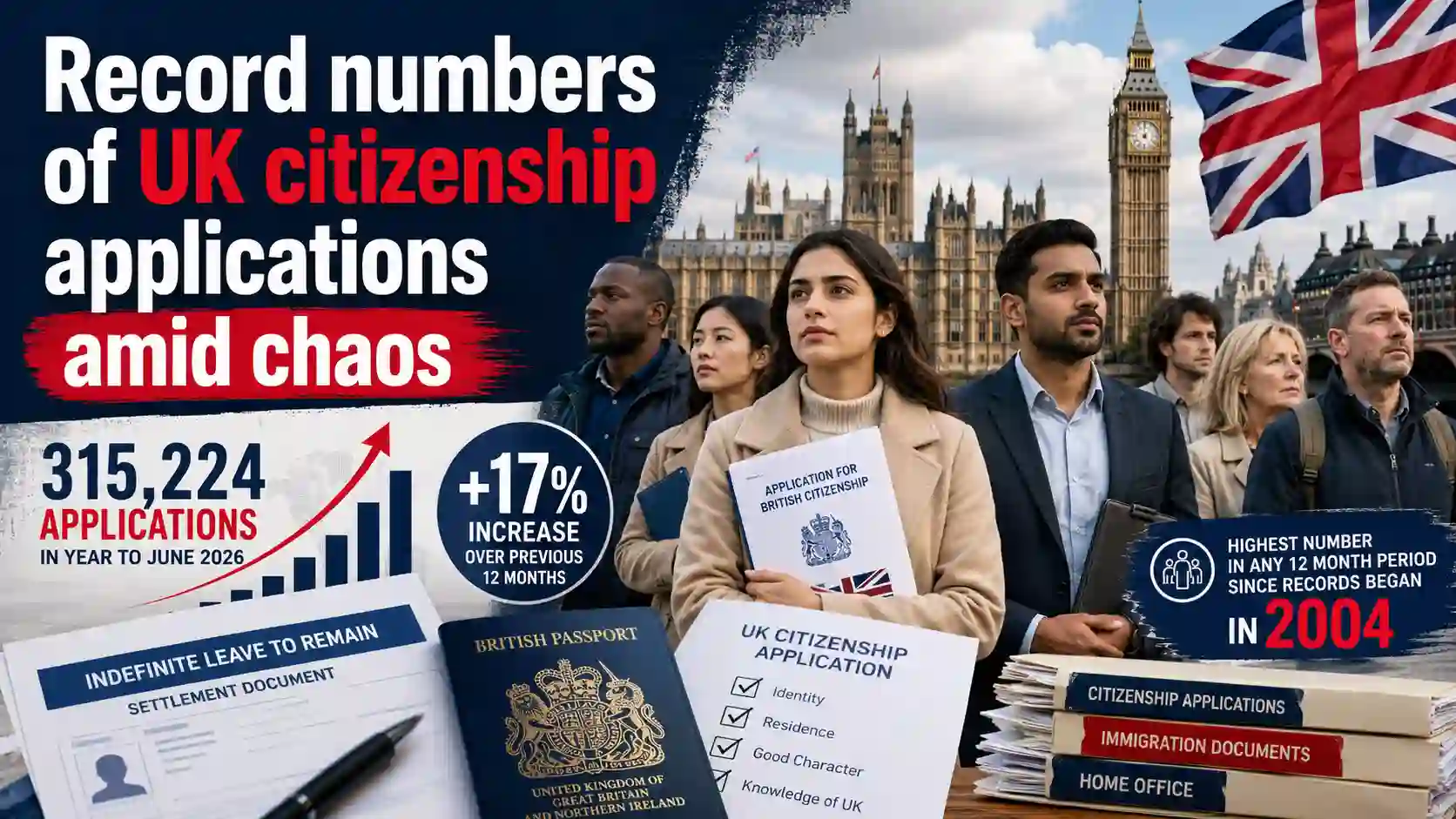
UK citizenship applications hit record high
“Uncertainty” about UK migration legislation has been blamed for the increase, which has seen more foreigners “become British”.
Uncertainty is pushing migrants to shore up their status as applications for UK citizenship hit a fresh record. Some 315,224 applications were made in the year to June 2026 – the biggest number in any 12 month period since records began in 2004, Home Office estimates reveal.
It is also up 17% over the previous 12 months, with non-EU nationals making up almost three-quarters of the new total.
Why UK citizenship applications are rising
The spike comes amid expectations that the Labour Government is to unveil a comprehensive overhaul of immigration regulations, including tighter rules on how to obtain indefinite leave to remain (ILR). You can not seek for British citizenship until you have ILR (or settled status) first, if you are not a British citizen.
UK ILR and citizenship rules
UK conscription ‘would hit one group’ — as ‘two more’ obtain exemption
Fears grow if WW3 starts, but how old can women be conscripted in the UK?
In the UK, most people with ILR can apply for citizenship after 12 months of having ILR.
Currently migrant workers can apply for the right to settle in the UK after five years, but proposals announced in November 2025 could see this quadrupled in some circumstances and adjusted up and down depending on the circumstances.
Migration uncertainty and British citizenship
“Research suggests that uncertainty can lead migrants to seek to secure their status by applying for citizenship,” said Nuni Jorgensen from the Migration Observatory at Oxford University.“The higher number of people applying for citizenship partly reflects rising non-EU migration even before Brexit, and a gradual increase in the share of non-EU migrants choosing to become citizens since 2021.”
“The rise is particularly sharp amongst EU citizens and suggests a more sudden change in people’s desire to become British,” he said. “There may be a role for Government and opposition party debates about restricting rights or removing people without citizenship.”
UK ILR awards also increase
Home Office data revealed the number of ILR awards in the year to June 2026 was up 24 per cent, with 199,628 the highest yearly amount since the year to June 2011.
The Home Office said the long-term increase in grants “reflects higher numbers of individuals granted indefinite leave, who then went on to apply for British citizenship”.