

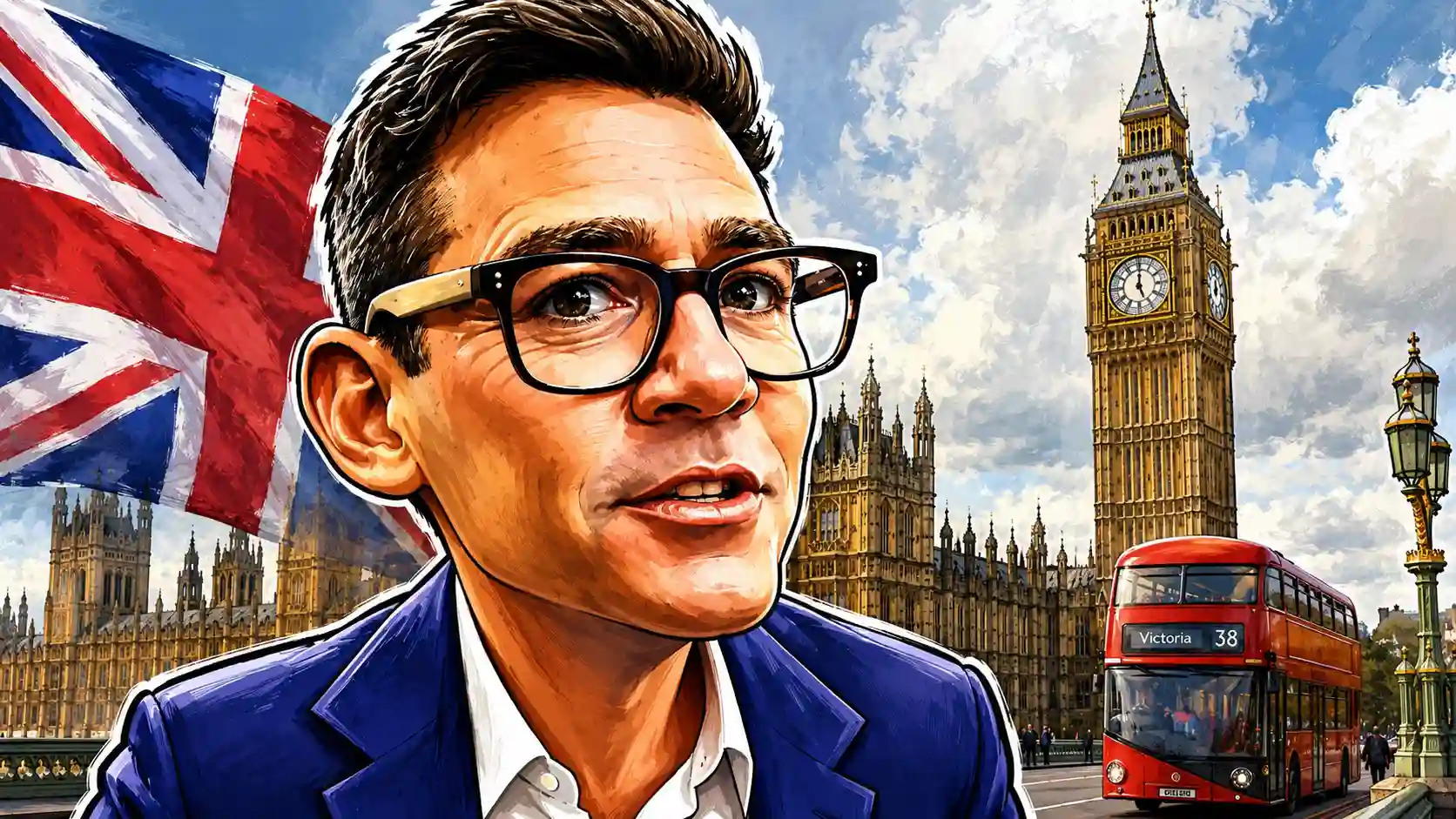
The clear majority of Labour MPs have selected Andy Burnham to succeed Sir Keir Starmer, meaning he will become the UK’s next prime minister next week.
The former mayor of Greater Manchester will walk into Downing Street weeks after returning to Parliament in last month’s Makerfield by-election.
Here’s what we know so far about his plans in office.
Power Devolution
Burnham has promised the biggest ever “rebalancing of power” away from Whitehall with more responsibility given to English regions in areas including housing and transport by a new No 10 unit based in Manchester.
The agency would be tasked with ensuring “equivalent living conditions” across Britain, based on a concept in the German constitution.
He has also pledged additional chances to enhance existing devolution arrangements in Scotland, Wales and Northern Ireland by taking authority “deeper down”.
This could be an area where he tries to build on the objectives of the Starmer government, which was spreading regional mayors beyond the big conurbations in England.
Rachel Reeves was also supposed to set out in the next Budget a plan to give regional mayors control of a slice of income tax raised in their areas.
Water, Energy and Public Control
Burnham has indicated he wants “greater public control” of water and energy industries in all parts of the UK.
He has said this may follow the example of Greater Manchester’s bus network where private operators seek to run services on a franchise basis, with local authorities in control of pricing, timetables and routes.
But he has not yet spelt out what a comparable plan for water and energy firms would look like in practice.
Burnham has been at pains to stress that his ideas don’t necessarily involve the full nationalisation of utility corporations, which would cost many billions of pounds.
One area where he has called for outright public control is Thames Water, a move which is already on the books after the government opposed to a proposed rescue arrangement for the debt-laden utility in June.
Lodging
Burnham has promised the largest council house building project “since the post-War period” – suggesting a huge increase in construction rates against recent years. However, he has yet to disclose details of how this might be paid.
The goal will be all the more difficult to accomplish, considering that Burnham has committed to keep to the current government’s debt and spending rules.
He has also said the money should be spent on homes for social rent, the poorest and most heavily subsidised type of publicly supported housing, and that the whole 10-year £39bn affordable housing budget for England should be spent on it.
Part of the funding is now spent on “affordable” housing where rentals are nearer to market rates and affordable home ownership plans.
He also said he hopes to see more density residential building in towns to save more green space from development.
Other policies in this area – such as curbing Right to Buy – have already been put in train by the present government.
Individual Taxes
Burnham has stated he would keep to Labour’s vow at the last election not to raise the major rates of income tax, VAT or National Insurance, while asserting there is “some room within that manifesto for movement” in other areas.
He also claimed during his campaign to be re-elected an MP he wants to “have a proper look” at perhaps raising the £12,570 starting threshold for income tax.
Burnham has previously stated that the UK over-taxes employment and under-taxes wealth, sparking speculation that he could hike capital gains tax – paid on income generated from selling assets like as shares and property apart from a main home.
In one interview, Burnham did not rule out a wealth tax, saying his future government may have “to ask for a little more” revenue at some point.
Labour MP John McDonnell said he would consider the public budget and wants to concentrate on “bringing people together” instead of creating “new divisions”.
He has previously suggested replacing council tax and stamp duty – a tax paid by homebuyers – with a new tax on the value of land, a concept he has been pushing since as far back as 2010.
Social Care
Burnham has long advocated the idea that social care should be a more universal system.
In a speech in 2023 he suggested this could be paid by replacing inheritance tax with a new “national care levy”. He has said everyone would pay this new tax, with the wealthy of course paying the most.
A 2024 estimate by the Health Foundation think tank suggested an NHS-style model of universal and comprehensive care may cost roughly £17bn in extra funding by 2035/36.
A less expensive option would be a Scottish-style system, with basic coverage for all in respect of some care costs, which the think tank said would cost about £7bn by 2035/36 to roll out in England.
Burnham said he did not “resile” from his earlier position on his Makerfield campaign but has yet to provide more insight on how the plan would work.
Politicians have been bedevilled for years by how to reform England’s social care system, where funded care is currently allocated for individuals with the highest needs and fewest assets.
While in opposition Labour had promised to revamp the system, but after assuming power it commissioned a review of funding that is not slated to report until 2028. Burnham has suggested he will bring that forward to the end of the year.
Immigration
Labour has tightened visa procedures to cut immigration levels – like the Sunak government.
Burnham said net migration “needs to fall further” during his Makerfield campaign, but has not set a particular target.
One potential sticking point for him will be the idea of extending the period foreign nationals already living in the UK need to wait before they can qualify for permanent residence.
Earlier this year, Burnham told Labour MPs to take note of warnings from the party’s former deputy leader Angela Rayner about the implications of the measures.
But he claimed he welcomed the “broad thrust” of ideas put up by Home Secretary Shabana Mahmood earlier this year, when he was standing to become an MP himself.
Employment and Welfare
Amid increased spending on health and disability benefits in recent years, Burnham said he wanted to see a “fair and lasting” cut to the UK’s welfare cost.
But he has not outlined plans to adjust the volume of welfare payments, or who is eligible to receive them.
Instead he says the claimant figure may be decreased with better employment support and “in-work” mental health support. He has also claimed he wants to guarantee work opportunities for 16-18 year-olds.
Burnham says he will preserve the “triple lock” – a political pledge to increase the state pension each year by the higher of inflation, wage growth or 2.5%.
Corporate Policy
Burnham sought to safeguard the potential for “sovereign manufacturing” in core sectors such as steel, military, energy and agricultural and ease the way for British companies to secure public contracts.
His team released a strategy statement during the by-election campaign, proposing to decrease business rates for pubs and music venues by 20%.
They stated this would be funded by additional taxes on out-of-town warehouses used by internet sellers such as Amazon.
Burnham also wants to raise the threshold for business rates, letting a number of tiny high street shops off the hook.
Foreign Policy and Defence
Burnham has indicated he would like the UK to re-join the EU in his lifetime, but has reiterated he doesn’t want to “re-run the [2016] referendum now”.
He promised a “closer relationship” with European countries and to “consolidate the progress achieved” in ongoing talks with the EU.
Soon his views on relations with the EU will be tested as he inherits a series of live negotiations on youth visas, food laws and proposals to relink the UK to the EU’s carbon pricing framework.
Another difficulty would be defence spending, which caused the departure earlier in June of Starmer’s defence secretary John Healey.
In one of his last moves as an incumbent, Sir Keir outlined plans to raise military spending by £15bn over the next four years by cutting spending elsewhere in the government, with details to be filled in by Burnham.
Another big problem will be how Burnham plans to deal with US President Donald Trump. He has suggested the UK should be seeking a “good relationship” with the US, but be willing to declare “if we can’t agree with them”.
Reforming the Electoral System
Burnham has stated he will “seek to persuade my own party” of the necessity for a vow in Labour’s next election manifesto to replace the UK’s first-past-the-post system with a form of proportional representation.
Conclusion
Andy Burnham is preparing to enter Downing Street with an ambitious agenda covering power devolution, housing, taxation, social care, immigration, employment, business, defence, foreign policy and electoral reform. While many of his proposals outline the direction he intends to take, several key policies still require further detail on implementation and funding. As he prepares to become the UK’s next Prime Minister, his plans are expected to shape the country’s political and economic landscape in the coming months.