

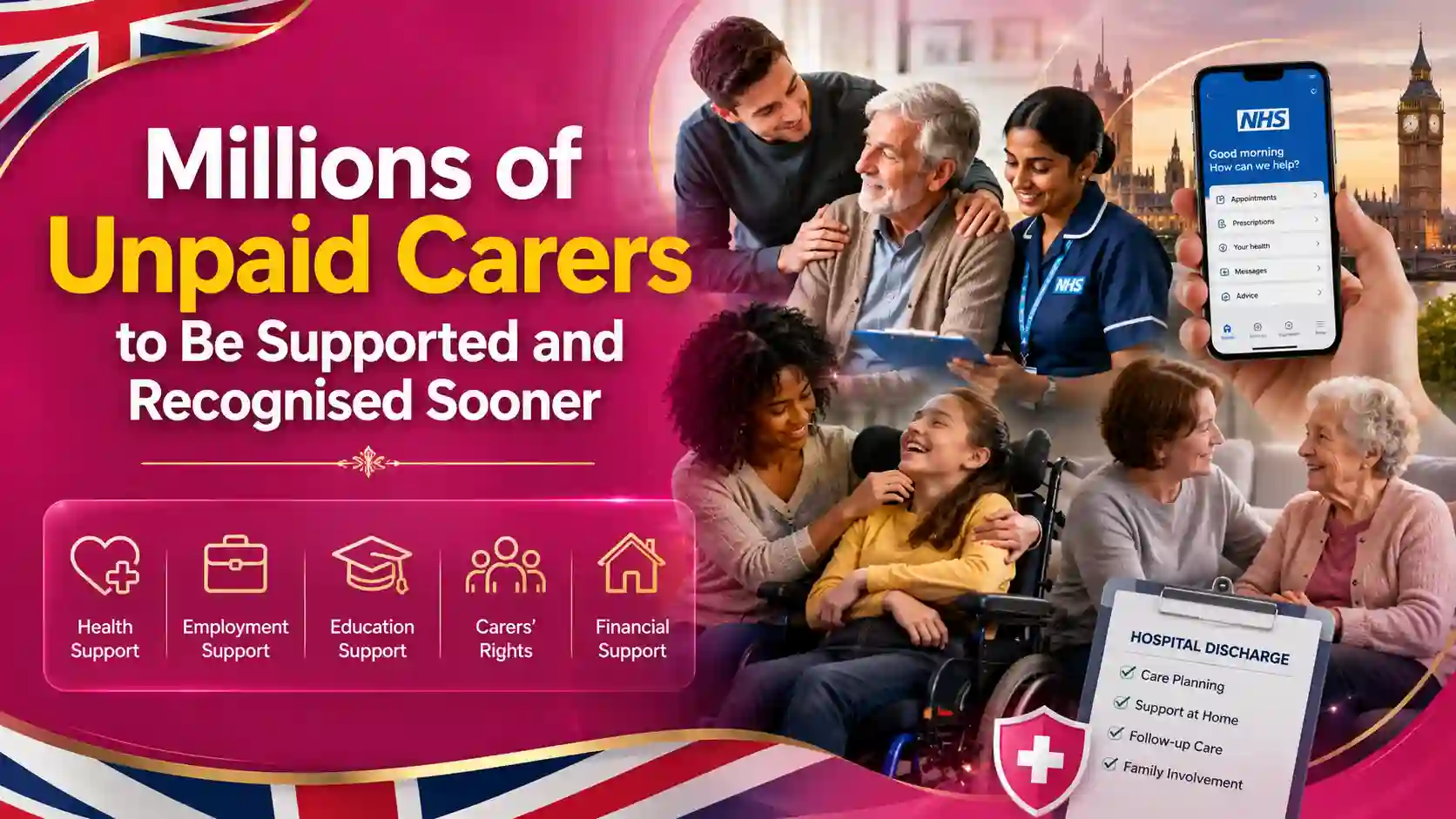
Millions of unpaid carers to be supported and recognised sooner.
New action plan to identify unpaid carers earlier and connect them to support more quickly
Cross-government plan will increase unpaid carer recognition, refer them to resources and enable them access health services and employment and education support.
The government is working on a mechanism to acknowledge and support unpaid carers as a key aspect of its ambitions for a national care service.
Millions of unpaid carers in England will be better acknowledged, referred to support and enabled to reach their full potential, under a new cross-government action plan unveiled today (14 July 2026).
Almost 10% of people in England are unpaid carers, a vital service in society caring for family members, friends or loved ones.
However unpaid carers often find it difficult to maintain employment or education, look after their own health including loneliness and isolation, and have issues in taking breaks away from caring.
The action plan is supported by 3 major pillars
- Honouring our carers
- directing them to services
- to help people reach their potential
Recognition is about ensuring that they are identified early, especially young caretakers. Unpaid carers can then be signposted to the help they need, whether that’s financial (for example, Carer’s Allowance), employment support (for example, Carer’s Leave and flexible working) or health and social care services. Support also means enabling them to develop their potential or remain in job or study so they can lead fulfilling lives outside their care obligations.
Minister of State for Care Stephen Kinnock said:
Unpaid carers make an incredible contribution in our communities, looking after loved ones, frequently putting the needs of others before their own and we owe them a debt of gratitude for all that they do.
But too many remain hidden, unable to find help or feeling that caring has cost them their own health, education, work or retirement.
Our action plan is helping to meet some of these problems by focusing on supporting carers to fulfil their potential in study or job. To all unpaid and young carers in all parts of the country – this administration understands your contribution and is determined to create a system that respects and supports you.
The government’s Unpaid carers action plan: acknowledge, refer, reach lays out 42 clear actions and practical steps spanning health, social care, education, employment and social security to increase assistance for unpaid carers.
The primary measures of the plan are:
- unpaid carers signing up for the NHS App to register their role so health providers can easily recognise they are a carer, engage them in care planning and direct them to the necessary support
- the single patient record will mean all health and care providers will have the same information for a person – meaning unpaid carers will no longer have to repeat the same information about the person they care for, helping them manage appointments and prescriptions
- unpaid carers information page on GOV.UK – clear guidance from health, social care, work and benefits brought together in one place for the first time – launching this summer
- publication of a ‘carers’ charter’ setting forth the rights and entitlements of carers
From spring 2027, the government will compel firms with more than 250 workers to offer extra help to unpaid carers so they may stay in their jobs while carrying out their caring responsibilities.
Better Care Fund measures will put carers at the centre of hospital discharge planning.
Young carers will be identified earlier and better helped to remain in education and not fall behind at school.
Data on young carers’ attendances will be held in schools alongside safe information sharing about young carers across services, so they are supported.
Kirsty McHugh, CEO, Carers Trust said:
This action plan has the appropriate aims – to make it easier for carers to be identified and get support and to ensure that carers are adequately regarded across health, education and employment. Too often carers continue to care despite the consequences on their wellbeing, finances and future chances.
The strategy is a great move as we wait for the Casey Commission on social care reform and it has to mean change on the ground for carers. This means ensuring that help is there when they need it, investing in the services that support them and having a long term strategy in place to deal with the difficulties carers encounter every day.
Emily Holzhausen CBE, Director of Policy and Public Affairs, Carers UK, said:
This is a significant step forward for unpaid carers and recognises the fact that they too frequently confront fragmented services, barriers to support and a lack of acknowledgement for the vital role they play in caring for family and friends.
The lives of carers do not fit neatly into the remit of one department. Their challenges are health, social care, employment, education, housing and welfare. Carers UK is pleased by a more joined-up strategy that brings together government agencies to prioritise carers’ needs, setting out who is responsible and how success can be tracked.
The action plan builds on the actions the government has already taken to support unpaid carers such as increasing the Carer’s Allowance earnings cap by over £2,750 in 2 years, the biggest increase since the 1970s.
Universal Credit and Pension Credit also help 1.1 million unpaid carers with an additional £2,500 a year through the carer element and carer addition.
The Department for Business and Trade has also started a consultation on employment rights and carer’s leave, which includes plans to offer paid carer’s leave and a right to return to work after a period of intensive caring.
We are taking the initial steps towards a national care service with an independent commission on adult social care led by Baroness Casey, which is already looking at the needs of unpaid carers. The commission’s preliminary recommendations are due this year.
Caroline Abrahams CBE, Director of Charity, Age UK said:
We welcome the unpaid carers action plan as a vital start on the long journey to ensure that the many millions of people who care are treated fairly, and that they are given the support they need.
We believe that the plan’s focus on enhancing the engagement of unpaid carers in hospital discharge will be particularly vital for many elder carers.
We hear far too often at Age UK from older adults caring for a partner, relative or friend who weren’t involved in discharge conversations and whose own health and other needs were ignored. This leads to a failure to discharge and is damaging and distressing for both the older carer and the person they are caring for.
Jacqui Cannon, Chief Executive of dementia charity the Lewy Body Society, said:
In the unpaid carers action plan the government is realising that unpaid carers are the backbone of this country. Caring for your loved one, especially if they have dementia, can be the hardest, loneliest but most rewarding thing a person can do. Carers need support at a time when they have the least amount of time, energy and resources to seek it out. It’s time we as a society show we care about the carers too.
Dr Charles Shepherd, Honorary Medical Adviser, ME Association, said:
Unpaid carers perform an essential role in caring for persons with long-term debilitating diseases like ME/CFS. But too frequently we hear of caretakers battling to look after their own health or their employment as well.
One group we are particularly worried about, and who get very little attention, are elderly caretakers who are facing difficult decisions about who will take over when they are no longer able to keep on.
So we applaud the Government’s awareness of the numerous challenges facing unpaid carers and we will be encouraging them to participate in the consultation process to find out what sort of practical help they need and how they may be better informed and supported.
Mark Winstanley, chief executive of Rethink Mental Illness, said:
Carers of people with a mental illness frequently tell us they feel like they are part of the ‘invisible mental health service’. Day in and day out they provide emotional and practical assistance as they use resources and advocate for the care their loved ones require, often at great cost to their own wellness.
We welcome this cross government plan to better recognise and support unpaid carers in the different areas of their lives. Everyone gains when we identify and support carers.