

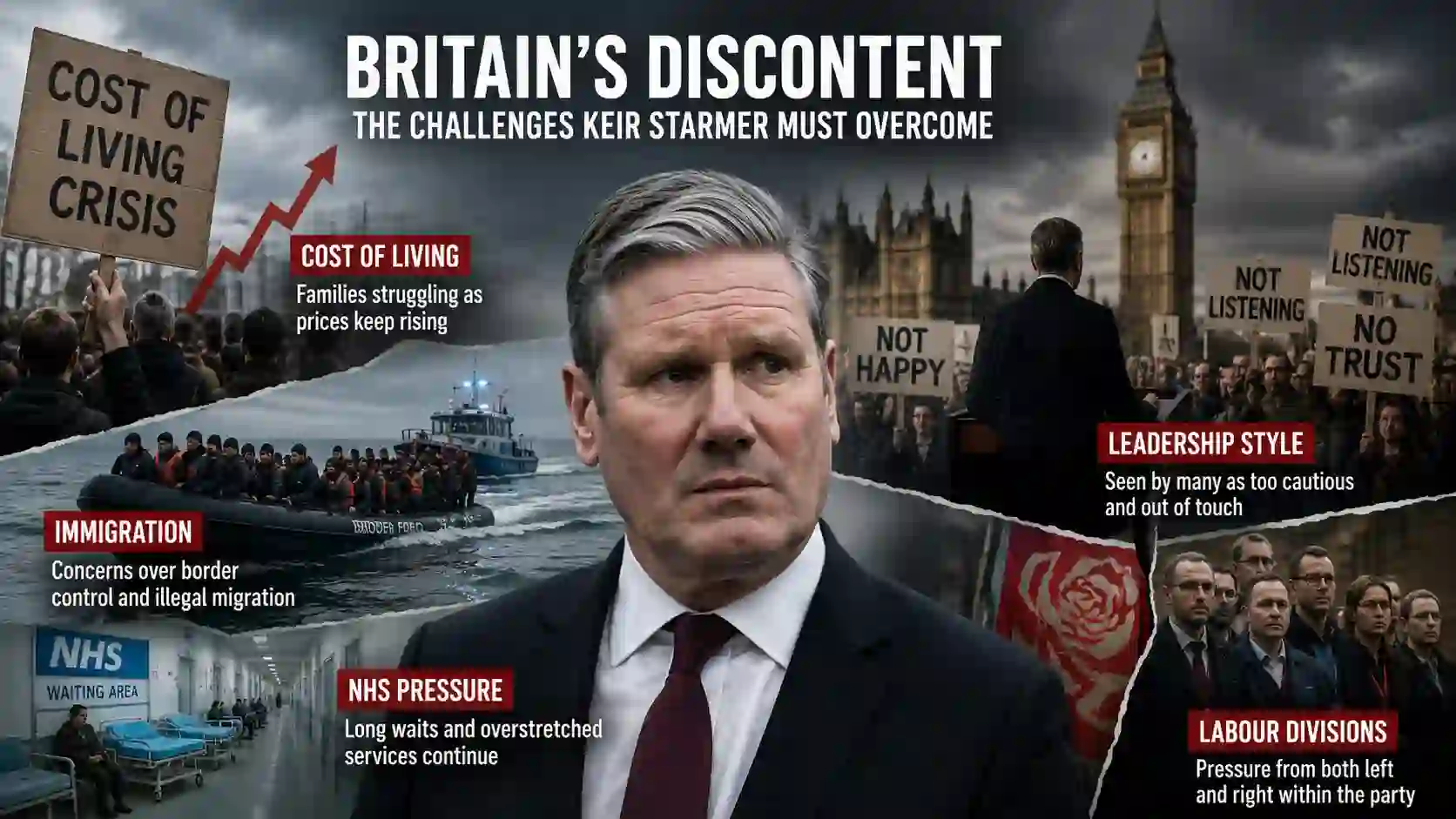
Britain opposes Keir Starmer — and there are 5 big reasons why
There seems to be rising public anger with Prime Minister Keir Starmer across the United Kingdom. From mounting online criticism to fears expressed by voters in local elections, many Britons are asking if Labour’s leadership is delivering the transformation people sought.
Starmer promised stability, competence and a new direction for the country when he took office, but a large part of the population today feels his government has fallen short. Political observers say a mix of economic worries, leadership style and policy decisions are fuelling discontent.
Here’s five big reasons why many voters are turning on Keir Starmer.
- Families Still Feel the Cost of Living Crisis
The rising cost of living is still one of the top concerns facing the UK. Many households are still feeling the pinch of high food prices, heating bills, rents and mortgage payments.
Voters had anticipated Labour to immediately improve economic conditions once in power, but many people feel daily life has not been better. Critics say that salaries aren’t rising as fast as inflation and ordinary households are getting little financial relief.
Frustration at the economic squeeze on working-class people in particular has been a key source of anger at government.
- Immigration Concerns and Policies
Immigration remains one of the most contentious political problems in Britain. Starmer has been criticised for not having a strong clear plan to tackle illicit migration and border crossings.
The criticism has been sharper in some regions where people feel that public services are under stress. Political opponents have used the issue to paint Labour as weak on border security, helping to boost support for alternative parties.
Even some former Labour voters say they want firmer action and more clarity from the administration.
- NHS Waiting Times Still Frustrating for Public
The National Health Service (NHS) is one of the most essential institutions in the UK, although many people still suffer long delays for treatment, GP appointments and hospital services.
Starmer has vowed to improve health care, but confidence among the people has taken a hit as waiting lists stay long. Nationwide, patients keep telling stories of surgeries being delayed and hospitals being overloaded.
Critics claim the government is not moving fast enough to fix the issue in the NHS, leading to anger among patients and health workers.
- Many voters think Starmer is too cautious
Some political experts say Keir Starmer’s cautious and controlled leadership style makes it difficult for him to motivate voters.
His supporters think he is disciplined and professional, while critics say he might seem too cautious, and that he avoids big political risks. This has left some voters feeling that Labour lacks a distinctive identity, or an inspiring vision for the future of Britain.
Personality is a big factor in modern politics and many feel Starmer has not been able to develop a strong emotional connection with the public.
- Labour under pressure from Left and Right
Mr Starmer also has to deal with divisions in the Labour ranks. Some on the left of the Labour party feel he has moved too far to the political centre, while moderate voters are worried about the long-term trajectory of Labour.
The balancing act has resulted in friction inside the party and confusion among segments of the electorate. Meanwhile, competing parties are gaining ground by targeting disgruntled supporters of other ideological factions.
Recent election results and polling patterns imply that if popular dissatisfaction continues Labour could come under greater strain.
Can Keir Starmer turn it around?
Supporters like Keir Starmer, who has been criticised, say many of Britain’s problems were inherited from previous governments and cannot be remedied overnight. They think economic recovery and public service reform take time.
But politics is swift and the public is not infinitely patient. If Labour doesn’t raise living standards, relieve pressure on the NHS and win back the confidence of voters, opposition parties may go on winning support before future elections.
The following months may prove a decisive moment for Starmer’s leadership and for the course of British politics.
Keir Starmer, Britain opposes Keir Starmer, Keir Starmer criticism, UK politics news, Labour Party UK, Keir Starmer leadership, NHS waiting times UK, UK cost of living crisis, immigration in Britain, Labour Party problems, British politics 2026, UK Prime Minister news, Keir Starmer approval ratings, UK economy crisis, Britain political news